
Ghee is a traditional milk product with cultural, culinary, and medicinal importance in India. It is pure milk fat obtained by removing water and milk solids from butter. Dairy fats were once considered harmful due to their perceived adverse health effects, but this perception is changing. The shift in mindset is partly due to the growing interest in traditional foods like ghee.
Saturated fats dominate ghee’s composition and include butyric acid, palmitic acid, and stearic acid. It also contains lower levels of monounsaturated and polyunsaturated fats, including naturally occurring trans fats such as conjugated linoleic acid (CLA). Since ghee is clarified butter, it contains virtually no lactose and only trace amounts of milk protein, yet it remains 100% dairy-derived fat.
Ghee can be beneficial when it is pure and consumed in moderation as part of a balanced diet.
Consumers looking for the best A2 cow ghee in India often research online before making a purchase. Some compare prices, some choose based on brand reputation, and others prefer ghee made using the traditional Bilona method. Hand-churned ghee made from the milk of indigenous Indian cow breeds is often considered superior due to its traditional preparation and nutritional value. Ghee produced through the Bilona process, especially A2 bilona ghee, is widely regarded as the best ghee in India.
Also Read: Despite High Saturated Fat, Is Ghee Healthy For All
What is Bilona Method of Producing A2 Cow Ghee
The Bilona method of producing pure desi ghee is not a new concept in India; it’s been practised since ancient times. A2 cow ghee is the finest product of the Bilona method. Purity is in the milk and the process. Sourcing milk from pure Indian cow breeds (like Gir, Sahiwal, or Tharparkar) and processing the milk further to produce pure A2 bilona ghee the traditional way is the actual concept of the Bilona method. The process of producing pure A2 cow ghee through the Bilona method is totally different from the industrial method. The Bilona method is a 100% manual process with no machine intervention. The Bilona method is a slow and labour-intensive method, which involves slow heating and fermenting to ensure retention of maximum nutrients.
In the Bilona method, fresh and pure milk is first boiled and then turned into curd, then hand-churned using a wooden tool called “bilona” (a rope-wound wooden churner) to separate fresh butter (makkhan). This butter is gently heated on a low flame until it becomes golden, pure bilona cow ghee.
The ghee you get is the best A2 cow ghee produced through the Bilona method, holding unaltered aroma, rich taste, and golden grainy texture. This is one of the best ghee types in India, holding healthy fats, vitamins, and other health-boosting nutrients.
Remember, it is the type of milk and the way ghee is produced that ensures quality produce.
Also Read: How Bilona Ghee Differs Biochemically from Industrial Ghee
Step 1: Collecting and Boiling Fresh A2 Cow Milk
The first step, essential in Bilona method is sourcing pure and fresh milk from desi cows, specifically – like Gir, Sahiwal, or Tharparkar cow breeds. For microbial safety, boiling is an essential step to ensure kill the pathogenic bacteria present in the milk. Heating milk to about 90–95°C (a gentle boil) for a few minutes helps destroy harmful bacteria and makes the milk safe for further processing. Boiling milk ensure that its safe for fermentation and further processing. Boiling improves shelf stability and reduces the risk of spoilage during curd formation. Boiling does not destroy the A2 beta-casein protein. The A2 characteristic depends on the cow’s genetics, not the heating process. This is the first step towards producing the best ghee in India.
Step 2: Setting the Milk into Curd
After sourcing fresh A2 milk, the first step begins with gently boiling the milk at a temperature around 90–95°C for a few minutes to ensure safety and remove harmful microorganisms. Once the milk is boiled, it is allowed to cool naturally until the temperature settles at around 40–45°C. Temperature plays a crucial role here, if the milk is too hot, it can kill the beneficial bacteria in the starter culture. If it is too cold, the milk may not set properly.
When the milk is nether too warm nor too cold, add a small spoon of curd to incept the fermentation. Stir it gently to mix, then cover and leave it for at least 8 to 12 hours, depending on the weather. In warmer climates, it may set faster; in cooler conditions, it may take longer. Traditionally, the milk is kept in an earthen pot (matka), which helps maintain a stable temperature and enhances the natural fermentation process.
If everything goes right, the milk transforms into thick, well-set curd (dahi). This natural fermentation step is crucial in the Bilona method because it develops beneficial lactic acid bacteria that improves texture, enhances flavor, and supports easier digestion. Proper fermentation is the key step in the producing the nest A2 Bilona ghee in India.
Step 3: Churning the Curd (The Heart of Bilona Method)
Once the curd is properly set, it is transferred to a deep earthen or wooden pot for churning. This is the most important step in the traditional Bilona process. A wooden hand churner, known as a bilona, is placed in the curd, and a rope is wrapped around its handle. The rope is pulled rhythmically back and forth, moving the churner clockwise and anti-clockwise. This slow, manual churning usually takes about 30–45 minutes and should be done at a moderate speed, not aggressively.
During this process, the fat naturally begins to separate from the fermented curd. Gradually, fresh white butter (makkhan) starts forming and floating on top, while the remaining liquid becomes buttermilk (chaach or lassi). Traditionally, a small amount of cold water may be added midway to help the butter separate more easily. Once fully separated, the butter is gently collected by hand.
This slow hand-churning technique is what defines authentic Bilona ghee. Unlike machine processing, it follows a natural fat separation process from cultured curd, not direct cream. This traditional method is believed to preserve the original aroma, texture, and nutritional integrity of the pure and best A2 cow ghee in India.
Step 4: Slow Cooking the Butter into Ghee
The freshly collected white butter (makkhan) is now slowly heated to transform it into pure Bilona ghee. This step must always be done on a low flame to protect the natural nutrients and develop the authentic aroma. Traditionally, the butter is placed in an iron kadhai or thick-bottomed vessel and allowed to melt gradually. As the temperature rises, the butter begins to simmer gently.
During this process, the remaining water content slowly evaporates, and the milk solids start separating and settling at the bottom. The mixture changes from cloudy to clear golden, and you will notice a rich, nutty fragrance filling the space. The milk solids at the bottom turn light golden to brown, which indicates that the ghee is almost ready. This stage usually takes 20–30 minutes on low heat, depending on the quantity.
It is important not to overheat or rush this process. Excessive heat can burn the milk solids and affect the taste. When done correctly, the result is clear, aromatic, golden A2 Bilona ghee with its natural vitamins and fat-soluble nutrients preserved. Once slightly cooled, the ghee is filtered and stored in a clean, dry container to maintain purity and shelf life.
Step 5: Filtering and Storing the Pure Bilona Ghee
Once the ghee is ready and the milk solids have settled at the bottom, it should be filtered while still warm. Pour the hot ghee carefully through a clean muslin cloth or a fine stainless-steel strainer to remove the browned milk residues. Filtering at the right time ensures the ghee remains clear, smooth, and free from burnt particles that could affect taste or shelf life.
After straining, the clear golden Bilona cow ghee is transferred into clean, dry glass jars, stainless steel containers, or traditional earthen pots. It is important that the storage container is completely moisture-free, as even a small amount of water can reduce shelf stability. The ghee should be allowed to cool naturally at room temperature. As it cools, it gradually thickens and develops a natural grainy texture, which is often considered a sign of traditionally prepared ghee.
When stored properly in an airtight container away from direct sunlight, pure Bilona ghee has a long shelf life without the need for preservatives. This final step completes the traditional Bilona method, ensuring that every spoonful of ghee remains pure, aromatic, and rooted in authentic Indian preparation practices.
Also Read: 8 Benefits of the Best A2 Cow Ghee in India
Best A2 Cow Ghee in India
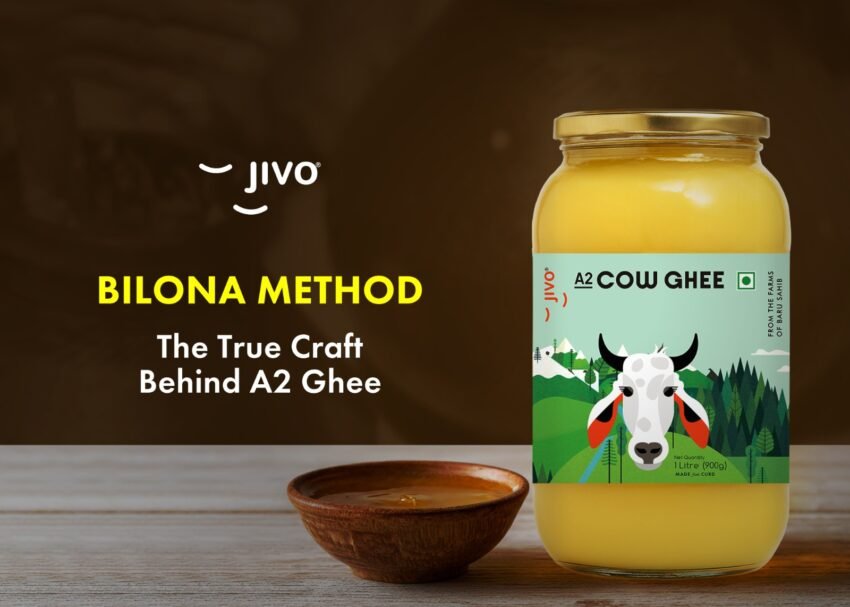
Not all oil brands offer traditionally prepared Bilona A2 cow ghee in India except for a few reputed oil brands like Jivo. Known for its best cold-pressed oils in India, Jivo also offers premium, pure A2 cow ghee. Jivo A2 bilona cow ghee is made from the milk of indigenous Indian cow breeds. The end-to-end to process is the Bilona method, which involves manual labour, starting from sourcing pure and fresh milk to boiling to fermentation, followed by hand-churning and slow heating.
It’s not easy finding the best A2 cow ghee in India made in the authentic Bilona way anymore. Jivo stands out as one of the popular oil brands offering the best A2 cow ghee produced through Bilona method.
What makes Jivo’s A2 cow bilona ghee special is its Bilona method and the nutrition it holds. It’s rich in vitamins A, D, E, and K, containing conjugated linoleic acid (CLA) for better metabolism and omega fatty acids for heart health. The A2 protein in ghee digests easier than regular ghee, and natural fermentation boosts probiotics for gut support. It’s the ultimate superfood that provides fuel for daily energy and immunity, and is free from chemicals and additives. When consumed in moderation, A2 cow ghee helps boost immunity and digestion.
If you are looking for pure Bilona A2 cow ghee, count on Jivo A2 cow ghee – taste, purity, and health ensured.
#bilona-ghee