
Ghee is an edible fat with traditional significance in India. It is still used in rituals, festivals, and therapies. In Ayurveda, ghee, when consumed in moderation, helps nourish the body by supporting digestion and boosting energy. The benefits can only be availed if pure ghee is consumed. Hence, it is important to buy the best ghee in India from reputed brands. However, identifying pure ghee is quite difficult in India, as adulteration and fake labelling are on the rise.
The sole motive behind food adulteration is to maximize profit, and this practice has long persisted in India and often operates in the shadows. Consumers need to be attentive while buying ghee. The best ghee in India has a distinct nutritive value and natural aroma that adulteration cannot fully imitate. There are ways to check the purity of ghee at home without visiting a laboratory. This blog shares tips on how to test the purity of ghee at home, so stay till the end.
Factual Report – Adulterated Ghee in India
The Times of India reports that 3,400 litres of adulterated ghee worth Rs. 17 lakh were seized last year in Bhopal. During the seizure, various packaged and loose ghee samples were recovered that were sold under different brand names.
Recently, as per a report by The Times of India, a joint operation was carried out to uncover the sale of adulterated ghee in Jaipur. Adulterated ghee was sold through counterfeit packaging using reputed brand names. In Jodhpur, a similar racket was exposed where palm oil was mixed with cheap ghee and sold.
The Economic Times report – In a raid carried out by Uttar Pradesh authorities along with Food Safety and Standards Authority of India, around Rs 5.45 lakh worth of fake ghee was confiscated. In another location in Uttar Pradesh, approximately 14,000 litres of adulterated ghee were seized in a joint operation.
Consumers have a mindset of buying pure ghee in India, whether it’s from walk-in stores or online purchases. If big stores and malls aren’t able to differentiate between adulterated and pure ghee in India, it becomes even more difficult for consumers to identify it. Food adulteration is like playing with health, as harmful impurities are added to impart a genuine texture and smell.
Impurities in Ghee
Pure ghee should contain only milk fat, but in many cases, different substances are mixed in to reduce cost or increase quantity with a motive to increase sale and maximize profit. One of the most common impurities present in ghee is palm oil. Palm oil blends easily and is hard to detect in small amounts. Soybean oil and sunflower oil are also sometimes added for the same reason.
Vanaspati is another common adulterant found in ghee. Vanaspati is a hydrogenated fat that gives a similar thickness but does not match the quality of pure ghee. In some low-grade products, animal body fats are mixed in to imitate the texture and consistency.
There are also cases where starch, usually from potatoes or other sources, is added to increase the quantity. Adding starch to ghee improves appearance. Artificial colours are also added to impart the rich yellow textural appearance like pure ghee. To imitate the natural aroma of ghee, synthetic flavours or essence are also added.
All these impurities are added to copy the real appearance of ghee. This is why many people believe they are buying the best ghee in India, but the trust is just the opposite.
How These Impurities Affect Ghee
When impurities are added to ghee to increase its quantity, the physical properties, aroma, taste, and nutritional value change, making it less beneficial and potentially harmful.
Ghee mixed with palm oil or other vegetable oils may feel lighter and melt unevenly, but it can never truly replace pure ghee. Vanaspati may imitate the textural thickness, but it will always lack the clean taste of pure ghee.
If starch is present, the consistency may feel slightly unnatural, especially after cooling. Artificial colours and flavours may give an initial impression of quality, but the aroma does not stay consistent during cooking.
Impure ghee, when used over time, starts to degrade, leading to an undesirable cooking experience. The food may start to taste different, often leaving a greasy feel and an unpleasant aroma.
How to Test Purity of Ghee at Home
Testing food products is like a health assurance. Consumers need not always depend on lab tests; rather, there are simple tests that one can perform at home. There are simple tests to check the purity of ghee too. To ensure that you buy the best ghee in India, it is vital to know how to test the purity of ghee at home. This helps save money and safeguards the health of your family.
Palm Test
This is one of the simplest ways to check ghee at home and does not require anything extra. Take a small amount of ghee on your palm and gently rub it between both hands. Pure ghee melts quickly because of your body heat and spreads easily on the skin. You will notice a light, pleasant aroma, similar to fresh milk. It should feel smooth and light, not sticky or overly oily. If the ghee takes time to melt or leaves a greasy, heavy layer on your skin, it may have some added oils or impurities.
Refrigerator Test
Take a small bowl of ghee and place it in the refrigerator for about 2 to 3 hours. Once it cools, observe its texture carefully. Pure ghee solidifies evenly and develops a slightly grainy texture, which is a natural sign of good quality. It should look the same throughout, without any layers. If you notice that some parts remain soft or there are visible oily layers on top, it could mean the ghee is mixed with other fats or oils.
Heating Test
Heat a teaspoon of ghee in a pan on a low flame and observe how it behaves. Pure ghee melts smoothly into a clear golden liquid and gives off a mild, nutty aroma that feels pleasant. It should not create too much foam and usually does not leave any residue after heating. However, if the ghee starts foaming excessively, burns too quickly, or leaves dark particles behind, it may not be pure. A sharp or unusual smell is also a sign of possible adulteration.
Iodine Test for Starch
This test helps detect if any starch or fillers have been mixed into the ghee. Melt a small amount of ghee and let it cool slightly, then add a few drops of iodine solution. In pure ghee, there will be no noticeable colour change. But if the ghee contains starch, the mixture may turn blue or purple. This happens because iodine reacts with starch, making it an easy way to spot such impurities at home.
Room Temperature Test
Leave a small amount of ghee at normal room temperature and observe it over some time. Pure ghee changes its texture gradually and remains consistent. It may become slightly soft or cloudy, but it will not separate. If you see that it turns cloudy very quickly or shows signs of separation into layers, it could indicate the presence of added oils or moisture. This simple test helps you understand how stable the ghee is in normal conditions.
Water Test
Take a glass of water and drop a small piece of solid ghee into it. Pure ghee usually settles at the bottom and melts slowly without spreading much. It stays together as it melts. On the other hand, adulterated ghee may float for longer or start spreading in the water, sometimes creating cloudy streaks. This difference in behaviour can give you a basic idea about the purity of the ghee.
These tests are easy to perform at home and help identify the best ghee in India. You may try performing 2 to 3 tests to double-check the purity.
Tips to Maintain Purity After Testing
Once you have performed the purity test of ghee at home and assured of having the best ghee in India, next comes maintaining the purity.
- Store it properly
- Always use airtight containers and keep it away from direct sunlight and heat.
- Use glass or steel containers to intact natural aroma of pure ghee.
- Use clean dry spoon to scoop out ghee to prevent moisture.
At regular weekly intervals, do perform check like fridge or palm test to ensure the purity test. These small checks make a big difference ensuring you consume the best ghee in India. Pure ghee holds nutritional benefits and can truly revive health if consumed in moderation as part of a balanced diet.
Nutritional Benefits of Ghee
The better the quality, the better the nutritional profile. The best ghee in India is mostly produced through the bilona method. This method involves sourcing fresh milk from desi cows, fermentation, and bilona churning. A2 cow ghee is considered the purest ghee in India, as it is produced through the bilona method and has a high nutritional profile.
Also Read: How the Best Ghee in India is Made: The Bilona Method Explained
https://www.amazon.in/live/video/1f0dd976f70c46f78d816e5954c97618
Healthy Fats
Ghee is mostly made of saturated fats, along with small amounts of monounsaturated fats (MUFA) and polyunsaturated fats (PUFA). The beneficial fats in ghee mainly provide energy to the body. Some of these fats are easier to digest compared to regular oils.
Important Vitamins
Pure ghee naturally contains vitamins like A, D, E, and K, which help with eyesight, bones, skin, and immunity.
Butyric Acid
This is a special type of fat that supports gut health and helps with smooth digestion.
CLA (Conjugated Linoleic Acid)
CLA is a natural compound that may support metabolism when taken in the right amount.
Omega Fatty Acids
Ghee has small amounts of omega-3 and omega-6, which are good for overall balance in the body.
Trace Minerals
It also has tiny amounts of minerals like calcium and phosphorus.
Conclusion
Following simple tests to check the purity of ghee at home can help you choose the best ghee in India. You can pick any two easy tests and perform them regularly to ensure your family gets the benefits of pure ghee. These checks also help you avoid buying adulterated ghee. Prefer A2 cow ghee, as it is produced using the traditional bilona method and has a better nutritional profile. Always choose reputed brands when buying ghee in India.
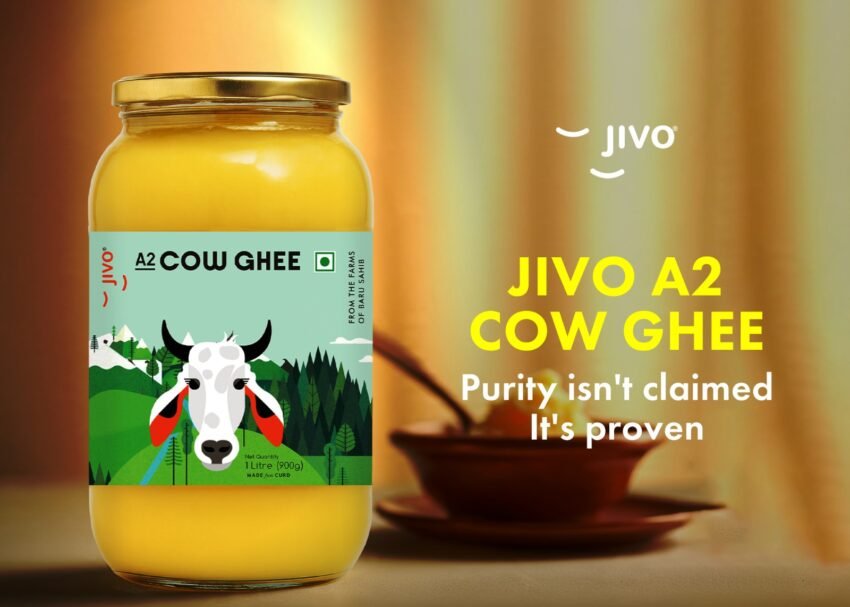
For a reliable option, you can consider Jivo A2 Cow Ghee, known for its quality and safety. It is a simple choice for families who want great taste along with trust in every spoon.
Also Read: Health Benefits of A2 Cow Ghee: Why It’s the Best Ghee in India for Digestion and Immunity