
Introduction
Cooking oils are a regular part of Indian meals, and they influence not only taste but also how the body processes food. Many people often look for the best cooking oil for digestion or the best cooking oils in India because food comfort is closely linked with how fats are handled inside the body. The best cooking oils for gut health are usually discussed in terms of how light or heavy they feel after meals and how smoothly they fit into daily eating habits.
To understand this better, it is important to know how cooking oil is digested inside the human body. When people ask how cooking oil is digested, the answer involves a complete biological system rather than a single step. The body follows a structured oil digestion process that ensures fats are broken down properly and used efficiently.
Why fats need a special digestive system
Fats are not like carbohydrates or proteins. They do not mix with water-based digestive juices, which makes them harder to break down directly. Because of this, the body uses bile salts (produced by the liver and stored in the gallbladder) and enzymes like pancreatic lipase to handle fats in a controlled way through emulsification and hydrolysis.
According to Colorado State University’s physiology resources, bile acids are critical because they act as emulsifiers — breaking large fat droplets into smaller ones. This dramatically increases the surface area, allowing water-soluble enzymes to efficiently digest the fats. Without this special mechanism, fat digestion would be highly inefficient.
This is an important part of understanding how fats are digested in the body, as it explains why fat digestion takes longer and follows a more structured path compared to other nutrients.
ALSO READ: Why It’s the Best Ghee in India for Digestion and Immunity
Step by Step process of cooking oil digestion in the human body
The digestion of cooking oils does not happen in one place or one action. It is a complete journey that involves multiple organs working together. Each step plays a specific role in breaking fats down and preparing them for absorption.
This section explains the full fat digestion in small intestine process in a simple and easy way.
Step 1: Entry of cooking oils into the digestive system
The process begins when food containing cooking oil enters the mouth. At this stage, there is minimal breakdown of fats. The mouth primarily helps in chewing (mechanical breakdown) and mixing the food with saliva before pushing it towards the stomach.
Cooking oils remain largely unchanged during this phase because they do not dissolve in saliva. However, lingual lipase — an enzyme secreted by glands on the tongue — starts a small amount of fat hydrolysis, particularly for short- and medium-chain triglycerides. This minor action continues into the stomach.
This is the starting point of understanding how cooking oil is digested, even though the major digestion process has not yet begun.
Step 2: Stomach mixing and early fat handling
Once food reaches the stomach, it is mixed and churned with gastric juices. The stomach helps convert food into a semi-liquid form so it can move further into the digestive system.
Fats remain mostly intact because stomach acid does not break them down effectively. However, gastric lipase (secreted by chief cells in the stomach lining) begins the enzymatic breakdown of triglycerides into diglycerides and fatty acids. This accounts for roughly 10 to 30 percent of total fat digestion in adults. The stomach’s mechanical churning also helps disperse fat droplets and prepares them for further processing.
This stage prepares fats for the next major phase of the oil digestion process.
Step 3: Bile emulsification in the small intestine
When food containing cooking oil enters the small intestine, bile is released from the gallbladder. Bile breaks large fat droplets into smaller droplets in a process called emulsification.
This step increases the surface area of fats from cooking oil, making it easier for enzymes to act on them. Bile salts act as natural detergents with both water-loving and fat-loving properties. They coat the droplets of cooking oil, breaking them into much smaller particles and increasing the surface area available for digestion by thousands of times. Without this step, fat digestion from cooking oils would be slow and incomplete.
This is a key part of fat digestion in small intestine, as it prepares fats for chemical breakdown.
Step 4: Enzyme action and breakdown of fats
After emulsification, pancreatic lipase acts on the fats from cooking oil. It breaks triglycerides into fatty acids and monoglycerides.
These smaller components are essential because they can be easily absorbed by the body. Pancreatic lipase, secreted by the pancreas into the small intestine, specifically targets the ester bonds in triglycerides. Working together with colipase (a co-enzyme), it efficiently hydrolyzes the fats present in cooking oil, producing two free fatty acids and one monoglyceride from each triglyceride molecule. This step forms the core of how fats from cooking oils are digested in the body.
Step 5: Absorption and transport in the body
After breakdown, fats from cooking oil combine with bile salts and form micelles. These help transport fat molecules to the intestinal lining.
Inside the cells, fats are rebuilt and packed into chylomicrons. These are then transported through the lymphatic system and released into the bloodstream. Micelles act as tiny transport vehicles that shuttle the fatty acids and monoglycerides from digested cooking oil to the brush border of the intestinal cells. Once absorbed, these components are reassembled into triglycerides inside the enterocytes and packaged into chylomicrons. The chylomicrons enter the lymphatic system (via lacteals) before reaching the bloodstream, allowing fats from cooking oil to be distributed for energy, storage, or hormone production. This completes the full oil digestion process inside the human body.
What scientific studies explain about fat digestion
Scientific studies on lipid digestion show that the breakdown and absorption of cooking oils in the human body is a coordinated process involving multiple organs, enzymes, and bile action working together in sequence.
A peer reviewed study on intestinal lipid absorption published in the American Journal of Physiology explains that digestion begins with limited enzymatic activity in the mouth and stomach, but the major transformation of fats happens in the small intestine. In this phase, bile salts play a key role in emulsifying dietary fats, breaking them into smaller droplets that can interact efficiently with digestive enzymes. This step is essential for improving the overall oil digestion process and preparing fats for absorption across the intestinal lining.
The same research highlights that pancreatic lipase, along with its cofactor colipase, acts on these emulsified fat droplets to break triglycerides into fatty acids and monoglycerides. These products are then incorporated into mixed micelles, which help transport lipids across the intestinal surface. This step is a critical part of how fats are digested in the body, as it ensures that dietary fats are converted into absorbable forms in an efficient manner.
Once absorbed by intestinal cells, fatty acids and monoglycerides are reassembled into triglycerides and packaged into chylomicrons. These are then released into the lymphatic system before entering the bloodstream, where they are used for energy production, storage, or structural functions in the body.
Overall, scientific evidence shows that fat digestion is not a single action but a structured biological sequence involving emulsification, enzymatic breakdown, and cellular transport working together in a continuous system.
Cold pressed oils and their role in gut health
Cold pressed oils are extracted without high heat or chemical processing, which helps retain natural nutrients, antioxidants, and fatty acids. These components are often associated with better dietary balance and gut comfort.
Extra Virgin Olive Oil
Extra Virgin Olive Oil is known for its natural antioxidant content and is often linked with supporting gut lining health and overall digestive balance when used as a cooking oil.
Extra virgin olive oil (EVOO) is rich in polyphenols and other bioactive compounds that positively influence the gut microbiota. Research shows that EVOO can reduce pathogenic bacteria while promoting beneficial microbes, supporting intestinal barrier function and contributing to better gut-brain axis communication and overall digestive health.
Virgin Coconut Oil
Virgin Coconut Oil contains medium chain triglycerides that are easier to digest and quickly converted into energy, making it suitable for light cooking.
Virgin coconut oil is naturally rich in medium-chain triglycerides (MCTs), primarily lauric acid (C12). Unlike most long-chain fats in typical cooking oils, MCTs in virgin coconut oil are rapidly hydrolyzed by lingual and gastric lipases and absorbed directly into the portal vein. They travel straight to the liver where they are quickly oxidized for immediate energy or converted into ketones, bypassing the slower lymphatic pathway required by most dietary fats.
Cold-Pressed Flaxseed Oil
Flaxseed Oil is rich in omega 3 fatty acids, which are associated with anti inflammatory dietary patterns and are usually consumed in small quantities added to food rather than high-heat cooking.
Flaxseed oil, high in alpha-linolenic acid (ALA), supports digestive health through its anti-inflammatory effects and ability to modulate gut microbiota. Research indicates that flaxseed oil can help promote a healthier balance of gut bacteria, reduce intestinal inflammation, and improve bowel regularity, making it a beneficial addition to the diet for overall gut comfort when used as a finishing cooking oil.
Cold-Pressed Sesame Oil
Cold pressed Sesame Oil is traditionally used in Indian cooking and is often associated with supporting digestive enzyme activity due to its natural composition.
Cold-pressed sesame oil retains its natural lignans, sesamol, and tocopherols because it is extracted without high heat or chemicals, preserving bioactive compounds that support digestion. In traditional use and emerging research, sesame oil is linked to better digestive enzyme activity, intestinal lubrication, and mild anti-inflammatory effects that promote overall gut comfort when used as a cooking oil.
Cold pressed Mustard Oil
Cold pressed Mustard Oil is commonly used in Indian households and is known for its strong natural profile and traditional digestive comfort in meals.
Cold-pressed mustard oil is extracted without high heat or chemicals, which helps preserve its bioactive pungent compounds. In traditional Ayurvedic practice and Indian cooking, it is valued for stimulating the secretion of digestive juices and bile, which supports appetite, better nutrient breakdown, and overall gut comfort when used as a cooking oil.
Even though all oils follow the same biological digestion process, these options are often included in discussions around the best cooking oils in India for digestion because of their nutritional profile and traditional use.
Factors that affect fat digestion
Fat digestion depends on several factors including meal size, oil quantity, enzyme levels, and overall digestive health.
Balanced meals support smoother digestion, while heavy oily meals may slow down the process.
Why understanding oil digestion matters
Understanding how cooking oil is digested helps in making better food choices. It explains why fats feel heavier and why digestion speed varies.
This also helps people make informed decisions when choosing the best cooking oils in India for digestion, based on how oils fit into daily eating patterns.
FAQs: Gut-Friendly Cooking Oils
How is cooking oil digested in the human body?
Cooking oil is emulsified by bile, broken down by enzymes, absorbed in the small intestine, and transported for energy or storage.
Which organ helps digest cooking oil?
The liver produces bile, the gallbladder stores it, and the pancreas releases enzymes that digest fats.
What is the best cooking oil for digestion?
The best cooking oil for digestion is one that is minimally processed, easy to digest, and rich in healthy unsaturated fats.
Conclusion
The digestion of cooking oils is a structured biological process involving emulsification, enzyme activity, and absorption. Each stage plays an important role in converting dietary fats into usable energy and supporting normal body functions. From the stomach to the small intestine, the body follows a well-coordinated process to digest and absorb fats efficiently.
Understanding this journey can help you make more informed dietary choices, especially when exploring the best cooking oils in India for gut health as part of a balanced diet and healthy lifestyle. While no cooking oil alone can determine digestive health, choosing minimally processed oils with a well-rounded nutritional profile can be a practical step towards mindful eating.
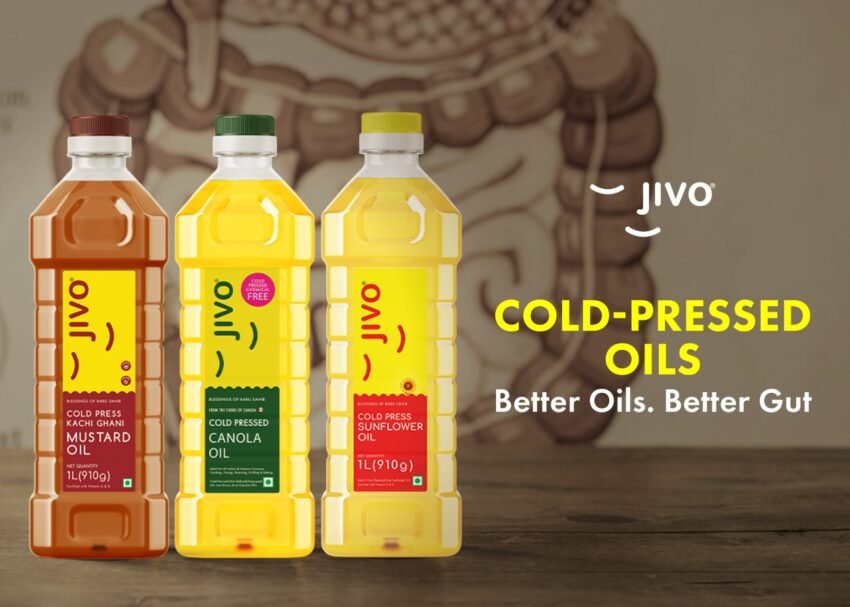
If you are looking for high-quality cold-pressed cooking oils, Jivo Cold-Pressed Oils offer a range of carefully processed options that retain their natural flavour and nutritional characteristics, making them a suitable choice for everyday cooking.
ALSO READ: How Jivo’s Best Cold-Pressed Cooking Oils Help Promote Digestion
References:
This article is based on the following credible scientific and educational resources:
- Absorption of Lipids – Colorado State University
- Bile – Colorado State University
- Digestion and Absorption of Lipids – Virginia Commonwealth University (VCU)
- Lipid Digestion, Absorption, and Transport – California State University
- Bile Salts – Oregon Institute of Technology
- Digestion and Absorption of Lipids – University of Hawaii
- Digestive System Processes – University of Oregon
- Intestinal Lipid Absorption – American Journal of Physiology
- Extra-virgin olive oil and the gut-brain axis – PMC / NIH
- Applications of Medium-Chain Triglycerides in Foods – PMC / NIH
- Dietary Flaxseed as a Strategy for Improving Human Health – PMC / NIH
- Sesame (Sesamum indicum L.): A Comprehensive Review of Phytochemicals and Health Benefits – PMC / NIH
All content related to the physiology of cooking oil digestion has been aligned with these established sources.