
The per capita consumption of edible oil per year in India is around 19.7 kg. Cooking without oil is not what you normally witness in India. Deep-frying, sautéing, and tempering are the cooking aspects where cooking oil plays a vital role. The only difference is the type of cooking oil used. Consumers looking for low-priced oils normally buy refined oils, while health-conscious families look for the best cooking oils in India, like kachi ghani or cold-pressed oil types. The latter two are priced a bit high due to their natural extraction process. Low-priced refined oils are pocket-friendly and may suffice for different types of cooking needs, but in the long run, they may impact health, especially heart health. In India, refined oils are widely used, and this buying pattern is mostly price-driven, another reason being that many aren’t aware of traditional or naturally processed oils.
This blog aims to clearly distinguish between kachi ghani, cold-pressed, and refined oils. After reading this blog, you will be able to choose the best cold-pressed oils in India that meet your cooking and health needs.
What is Kachi Ghani Oil Extraction Method?
Kachi means raw, and ghani stands for oil mill. Together, the term ‘Kachi Ghani’ refers to a cold-pressed method of oil extraction. This is a traditional oil extraction process which phases out technology and machinery. Only traditional equipment is used, like wood or stone, to press plant seeds or nuts. Kohlu is another example of the Kachi Ghani process, which involves a traditional mortar and pestle made of wood or stone to extract oil. The Kachi Ghani or Kohlu oil extraction process is mainly practised in rural areas for producing pure, unaltered edible oil. The Kachi Ghani or Kohlu method is suitable for low-volume oil production because it requires manual effort, and since there is no mixing, the yield is low. This is the reason why the best cooking oils in India that are produced through the Kachi Ghani process are priced high.
Cooking with Kachi Ghani oil is healthy as it retains raw, unaltered nutrients. The quality of the oil is pure and holds on to its natural flavour and pungent smell. Kachi Ghani mustard oil is one of the popular cooking oil grades that most Indian families still prefer over refined oils.
Kachi Ghani process is closely related to the cold-pressed extraction method; the only difference is the use of tools. The former involves wood or stone, while the latter uses a mechanical press.
What is Cold Pressed Oil Extraction Process?
Cold-pressed oil extraction refers to the process where plant seeds or nuts are crushed by exerting mechanical pressure. This method is a technically advanced method, which involves modern machines like power ghani or electric kolhus. It is basically an electrified cold-press oil extraction process for producing high-quality edible oils without chemical refining.
The end-to-end cold-pressing is done while maintaining minimal heat of around 50 degrees Celsius. This low temperature setting is used to prevent the depletion of nutrients. Once the freshly pressed oil is collected, it is allowed to sediment for 24 to 72 hours so that the tiny seed particles settle at the bottom. This is a natural sedimentation process, which involves no chemical use.
Cold-pressed oils are considered among the healthiest oils because of their natural extraction process and the quality and amount of nutrients these pure oils retain. However, purity and quality are assured only if you buy the best cold-pressed oils in India from reputed oil brands. Cold-pressed oils have a similar nutritional profile to Kachi Ghani oils and are perfect for daily Indian cooking and health.
What is Refined Oil Extraction Method?
The term ‘refined oil’ means filtering oil to make it clean. Refined oils were introduced to make oil cleaner, increase shelf life, enable mass production, and make it more affordable. Many Indian families use refined oils completely unaware of how they are produced.
Refining refers to industrial processing, which involves crushing seeds or nuts, similar to the cold-pressing and Kachi Ghani methods, but things change after this stage. Next comes a series of processes, which involve multiple stages of high heating. Degumming, neutralization, bleaching, and deodorization are the main processes involved in producing refined oils.
Chemicals such as hexane, phospholipids, phosphoric acid or citric acid, and sodium hydroxide (caustic soda) are used, and the temperature ranges between 100 to 220 degrees Celsius. With so many chemicals and high-temperature heating involved, how can you expect refined oils to be nutritious and good for health?
Many Indian families are under the impression that they are buying the best refined oils in India, but the fact is quite different. Low-priced refined oils are pocket-friendly but not heart- or health-friendly.
Kachi Ghani vs Cold Pressed vs Refined Oil: Key Differences Explained
Now let us scan these three types of cooking oils produced through different extraction processes. The main difference starts with how each oil is made. Kachi Ghani involves wooden or stone pressing or kohlu with almost no heat. Cold pressing involves modern machines and extracts oil under minimal heat. The refining method uses modern machinery and techniques, involving chemicals and high heating to make it clear and neutral.
Kachi Ghani and cold pressed oils retain nutrients and are healthy, packing natural goodness. Refined oil contains minimal or no nutrients, but has a longer shelf life compared to Kachi Ghani and cold-pressed oils.
No chemicals or high heating is involved in cold pressing and Kachi Ghani oil extraction, keeping natural nutrients intact. Refined oil stages involve chemicals and high heating in almost every stage, thereby depleting nutrients.
Kachi Ghani and cold-pressed oils have no additives or preservatives, which means they impart natural goodness like authentic taste, aroma, and flavour during cooking. They do not overpower dishes. Refined oils, on the other hand, are plain and have no natural properties, making meals taste less flavourful.
Kachi Ghani and cold-pressed oils are priced a bit high, and that’s because of the quality. Refined oils are cheaper and mass produced.
A 1 litre refined oil bottle from top oil brands in India on Amazon ranges between Rs. 126 to Rs. 245, whereas cold-pressed oils can range from Rs. 999 to more, depending upon the type of oil.
| Aspect | Kachi Ghani Oil | Cold Pressed Oil | Refined Oil |
| Processing method | Traditional wooden or stone press | Mechanical pressing at low temperature | Factory process with solvents and cleaning |
| Heat level | Very low | Low | High Heating |
| Chemical usage | None | None | Used in cleaning steps |
| Taste and aroma | Strong and natural | Mild and fresh | Almost neutral |
| Nutrients retained | High | High | Lower |
| Shelf life | Shorter | Medium | Longer |
The comparison table serves as a quick guide to comprehend the basic differences between kachi ghani, cold-pressed, refined oils.
Also Read: How Do Cold-Pressed Oils Preserve Nutrients Better than Refined Oils in India
Which Cooking Oil is Healthiest in India for Daily Cooking?
The choice of oils is requirement-specific. A heart patient avoids high-saturated fat oils like coconut and palm oil, but goes for cold-pressed canola oil. Indian families who prefer to have a pungent aroma in their meals, especially when preparing fish curry or pickle, opt for Kachi Ghani mustard oil. Health-conscious cooks and families prefer extra virgin olive oil.
It is always good to go with the best cold-pressed oils in India or traditional Kachi Ghani oils to ensure you get the maximum health and cooking benefits.
Best cooking oils in India you may go with are:
Cold-Pressed Canola Oil for Heart-Health
One of the best cooking oils for heart health in India, canola oil gains immense popularity because of its low saturated fat content, which is around 7%. The United States Food and Drug Administration (FDA) supports the claim that consuming high oleic acid canola oil may help reduce the risk of coronary heart disease. There are credible meta-analyses, research journals, and clinical trials that support canola oil as one of the healthiest edible vegetable oils in India and across the globe.
Canola oil contains monounsaturated (MUFA) and polyunsaturated fats (PUFA), the former being higher while maintaining an appropriate fat balance. These beneficial fats, especially oleic acid in MUFA, help contribute to the maintenance of blood cholesterol levels when consumed in moderation. The nutritional goodness of canola oil makes it one of the best cooking oils for heart health in India, especially for heart patients.
With a high smoke point ranging between 170 to 190 degrees Celsius, canola oil is perfect for low to high heat cooking. It maintains the oil’s stability without breaking down at high temperatures.
Since the cold-pressed version involves no heat and no chemicals, cold-pressed canola oil is considered one of the best and healthiest cooking oils in India.
Also Read: What the Dietitian says – Why Cold-Pressed Canola Oil Supports Brain and Heart
Kachi Ghani Mustard Oil (Cold-Pressed)
One of the most preferred cooking oils in Indian households, Kachi Ghani mustard oil holds strong cultural and culinary significance because of its natural extraction process and bold flavour.
Holding traditional significance, Kachi Ghani mustard oil is a multi-purpose oil that’s found in most Indian kitchens. It has been used in cooking, skin applications, and therapies.
Kachi Ghani cold-pressed mustard oil is gaining popularity in India because of its natural extraction process, which phases out chemical refining and high heating. This oil is extracted by crushing fresh mustard seeds sourced from organic farms, mechanically pressed or wooden pressed under minimal heat. The result is pure, unrefined, and nutrition-rich mustard oil. Cold-pressed Kachi Ghani mustard oil is healthier compared to refined mustard oils owing to its natural extraction process.
Kachi Ghani mustard oil contains higher levels of monounsaturated (MUFA) and significant polyunsaturated fats (PUFA). It also contains omega-3 and omega-6 fatty acids in a balanced ratio. A journal on mustard oil suggests that the beneficial components in MUFA may be helpful for cardiovascular health. The antibacterial properties of mustard oil are helpful in preventing bacterial growth and benefit both skin and hair health.
Cold-pressed mustard oil has a high smoke point of 250 degrees Celsius, which supports high-heat cooking, especially deep frying. This oil is one of the best cooking oils in India that’s perfect for Indian cooking, especially the cold-pressed version, and if consumed in moderation, may boost overall health.
Also Read: Know the Health Benefits of Mustard Oil
Conclusion
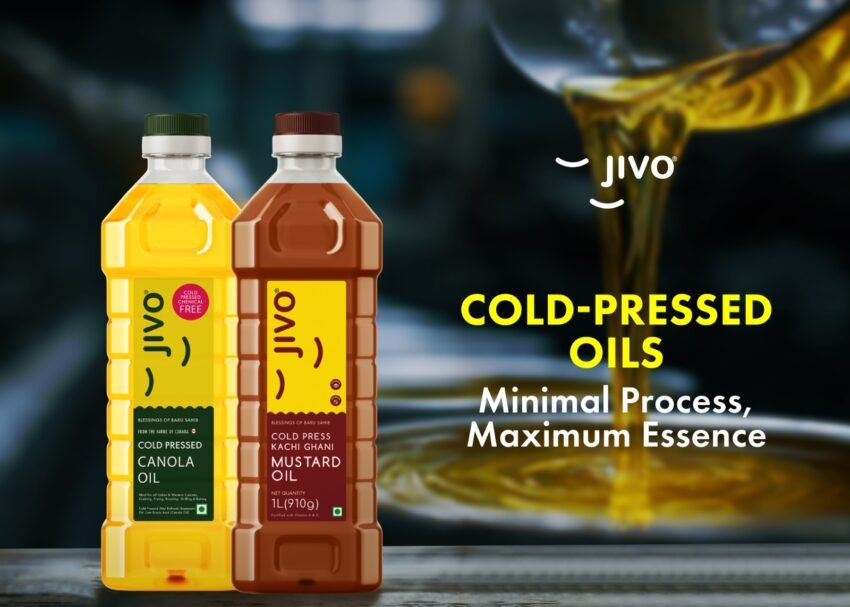
Identifying and picking the best cooking oils in India is important. Don’t go by low-priced, unhealthy refined oils because it is your health that’s at stake. Refined oils look clean and clear, but the truth is, they don’t have health-enhancing nutrients in them. Kachi Ghani and cold-pressed oils are the healthiest oils in India to go with if health is what you seek. Buy the best cooking oils in India from reputed oil brands in 2026, especially cold-pressed oils. You can try Jivo cold-pressed oils, as this oil brand exclusively offers nutritional products, with cold-pressed oils being its top category.
Try Jivo cold-pressed canola oil and Kachi Ghani mustard oil for over 2–3 months and experience the difference in taste, cooking experience, and health.