
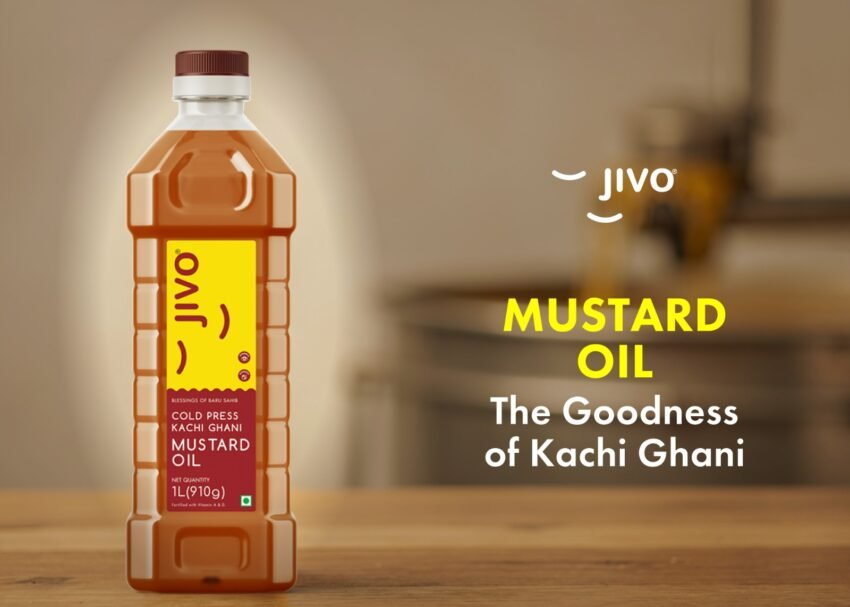
Which is the best mustard oil in India? Cold-pressed or wood-pressed mustard oil, extracted naturally without chemical refining, solvent extraction, or high-heat processing, ranks among the best mustard oils in India. This type of oil is known as kachi ghani mustard oil and is minimally processed to retain maximum nutrients.
Introduction: Best Mustard Oil in India
The price of the best mustard oil may be slightly higher because of its traditional extraction process. The yield is lower when mustard seeds are crushed using wood-press or cold-press methods. Manual effort is higher and involves non-industrial processes. No chemicals. No solvent extraction. No high heating. The end product is pure mustard oil. These methods, wood-pressed and cold-pressed, produce the best kachi ghani mustard oil, free from chemicals and additives.
In rural areas, mustard oil is still traditionally processed using the kohlu or chekku method. However, the popularity of minimally processed oil is growing in urban areas as well. Health-conscious consumers are actively looking to buy kachi ghani mustard oil because of its purity.
Mustard oil has always dominated the cooking oil market in India owing to its long-standing reputation in Ayurveda and its versatile properties.
However, not everyone is able to identify the best mustard oil in India, whether it is produced through wood-pressed or cold-pressed methods. Hence, it is important to educate consumers about choosing the best quality mustard oil that retains its natural nutritional composition.
The aim of this blog is to help cooks and individuals understand the different types of mustard oil extraction methods and choose the best cooking oil in India for a healthy cooking experience.
Popularity of Mustard Oil in India
India produced 12 million metric tonnes of mustard oil in the fiscal year 2023-24, recording a 13% and 35% increase in quantity and price. This indicates the popularity and growing demand of mustard oil in India.
Mustard oil is a versatile cooking oil known for its multi-purpose properties. From cooking to skin and hair care, this popular edible oil has proven its value, making it one of the most preferred cooking oils in India. You name the recipe, and mustard oil can be used to prepare it. From pickling and everyday cooking to deep frying, mustard oil caters to a wide range of cooking needs without overpowering the flavour of dishes.
Very few people knew the difference between refined and traditionally extracted mustard oil, which led to the impulsive purchase of highly processed mustard oil. However, the popularity of kachi ghani mustard oil is now on the rise, and many consumers are also searching for wood-pressed and cold-pressed mustard oil on Google. This is a positive sign that indicates the growing demand for the best kachi ghani mustard oil in India.
Understanding the Different Types of Mustard Seeds
The mustard oil we use is not extracted from a single mustard seed variety. Rather, there are different types of mustard seeds in India that are used for oil extraction.
Yellow Mustard Seeds
Yellow mustard seeds are known for their relatively mild flavour. Oils extracted from these seeds tend to be less pungent and are often preferred by people who enjoy a softer mustard profile.
Brown Mustard Seeds
Brown mustard seeds are among the most widely cultivated varieties in India. They produce oil with a balanced aroma and flavour, making them suitable for everyday cooking.
Black Mustard Seeds
Black mustard seeds are valued for their strong aroma and sharp taste. Oils extracted from these seeds often have a more pronounced mustard character and are commonly used in traditional regional cuisines.
These mustard seed varieties yield pure mustard oil when extracted through cold-pressed or wood-pressed methods.
Know the Types of Mustard Oil in India and Why Yellow Mustard Oil is Gaining Popularity in 2026
What Is Kachi Ghani Mustard Oil?
Kachi Ghani refers to a traditional method of extracting oil by mechanically pressing mustard seeds at controlled temperatures.
Unlike heavily processed oils, Kachi Ghani mustard oil is extracted undergoing minimal processing, which helps retain its characteristic aroma, flavour, and nutritional goodness.
Before, oil was extracted using traditional methods that focused on slow pressing rather than mass production. This method helped preserve the natural qualities of the seeds and became an integral part of India’s food heritage.
Today, many consumers searching for the best kachi ghani mustard oil prefer products that continue to follow these traditional principles.
The Traditional Role of Kohlu and Chekku
Before the advent of modern machinery for oil extraction, people in rural areas used traditional extraction systems operated by skilled artisans to produce pure mustard oil while preserving its natural health benefits.
Kohlu
A Kohlu is a traditional oil press commonly associated with North India. It uses slow mechanical pressure to crush seeds and extract oil.
Chekku
A Chekku is a traditional wooden oil press widely used in South India. The extraction process is similar in principle and focuses on careful, gradual pressing.
Both traditional tools for extracting pure mustard oil were designed to focus on quality over speed. Even today, many consumers associate Kohlu and Chekku extraction with authenticity and craftsmanship.
What Is Cold-Pressed Mustard Oil?
Cold-pressed mustard oil is extracted through mechanical pressing without chemical refining, maintaining minimal heat during processing.
The objective is to minimise heat generation while extracting oil. This approach helps maintain the oil’s natural flavour profile and nutrients.
As awareness about traditional foods continues to grow, more consumers are looking for cold-pressed options when selecting cooking oils for their homes.
When researching the best cold-pressed mustard oil in India, buyers often focus on factors such as extraction methods, seed quality, and manufacturing transparency.
What Is Wood-Pressed Mustard Oil?
Wood-pressed mustard oil is extracted using traditional wooden chambers instead of modern metal-based machinery.
The wooden press helps reduce friction during extraction, supporting a slower and more controlled process.
Because of its traditional roots, wood-pressed mustard oil is often preferred by consumers who value heritage food practices and minimally processed ingredients.
Many small-scale producers continue to use wood-based extraction systems to preserve the traditional character of mustard oil.
Cold-Pressed and Wood-Pressed: What Is the Difference?
For many, cold-pressed and wood-pressed mean the same thing. But they do not.
Cold-pressed refers to the extraction technique, where a mechanical press is used to exert pressure for crushing seeds while maintaining minimal heat, typically below 50°C.
Wood-pressed refers to the equipment used during extraction. A wooden press naturally supports slower processing and reduced friction.
In practical terms, many wood-pressed oils are also cold-pressed, but not every cold-pressed oil is necessarily extracted using a wooden press.
Understanding this distinction can help buyers compare products more effectively.
Is the Best Mustard Oil in India Cold-Pressed or Wood-Pressed?
Benefits of Mustard Oil
Mustard oil contains several naturally occurring compounds, including a mixture of lipids and volatile phytochemicals, erucic acid, allyl isothiocyanate (which gives it its characteristic pungency), and glucosinolates. However, the best mustard oil also contains other beneficial nutrients that contribute to its nutritional value.
Contains Beneficial Unsaturated Fats
Mustard oil contains a higher proportion of monounsaturated and polyunsaturated fats compared to saturated fats.
Research suggests that replacing saturated fats with unsaturated fats may support cardiovascular health as part of a balanced diet.
Provides Omega-3 and Omega-6 Fatty Acids
Mustard oil naturally contains omega-3 and omega-6 fatty acids, which are important components of a balanced diet. Research suggests numerous health benefits of PUFA omega- 3 and omega-6 when consumed in moderation.
Contains Natural Antioxidant Compounds
Mustard seeds contain plant compounds that exhibit antioxidant activity. Antioxidants help protect cells from oxidative stress.
Supports Traditional Indian Cooking
One of the most practical benefits of mustard oil is its suitability for a wide range of Indian cooking methods. From tempering spices to preparing pickles and regional delicacies, it contributes both flavour and aroma to food.
7 Health Benefits of Mustard Oil Backed by Science You Need Know
How to Choose the Best Mustard Oil for Cooking
Selecting mustard oil is not simply about choosing a well-known brand. Several factors can help determine whether an oil is suitable for your kitchen.
Check the Extraction Method
Look for clear information about whether the oil is Kachi Ghani, cold-pressed, or wood-pressed.
Transparent labelling often indicates that the manufacturer is willing to disclose how the oil is produced.
Verify Ingredient Purity
A quality mustard oil should ideally contain only mustard oil. Always review the ingredient list carefully.
Look for FSSAI Compliance
Products should display a valid FSSAI licence number and comply with Indian food safety regulations.
Understand the Source
Responsible producers are usually transparent about seed sourcing, production practices, and quality standards.
Evaluate Packaging
Proper packaging helps maintain freshness and protects the oil from contamination during storage and transportation.
These factors can help consumers identify the best mustard oil for cooking according to their individual preferences and culinary needs.
ALSO READ: Is Your Mustard Oil Pure? 7 Simple Tests to Spot Fake Mustard Oil
Why Traditional Extraction Methods Are Making a Comeback
Across India, there is a growing appreciation for foods that are produced using traditional methods.
Consumers are increasingly interested in products that connect them to local food traditions and skilled craftsmanship. This shift has renewed interest in oils produced through Kohlu, Chekku, cold-pressed, and wood-pressed techniques.
Behind many of these products are artisans whose knowledge has been passed down through generations. Their expertise continues to play an important role in preserving traditional oil-making practices.
For many families, choosing traditionally extracted mustard oil is about more than cooking. It is also about supporting heritage food systems and valuing methods that have stood the test of time.
Conclusion
Finding the right mustard oil starts with understanding how it is made. The type of mustard seeds used, the extraction process, and the commitment to quality all influence the final product.
Whether you prefer a traditional Kachi Ghani variety, a carefully produced cold-pressed option, or a wood-pressed oil made using time-honoured techniques, taking the time to evaluate these factors can help you make a better choice.
As more consumers seek authenticity and transparency in the foods they buy, traditional extraction methods continue to demonstrate why they remain relevant in modern Indian kitchens. For those looking for the best kachi ghani mustard oil, can try Jivo cold-pressed kachi mustard oil as it is traditionally extracted and is fortified with vitamin A and D.
Jivo offers a wide range of cold-pressed oils, both premium and traditional cooking oils. Traditional cooking oil like mustard is produced from quality seeds, and cold-pressed engaging skilled artisans.
Choose healthy cooking oil in India – cold-pressed kachi ghani mustard oil.