
Walk into any kitchen store in India and you will see the same words printed on every second bottle. Heart healthy. Zero cholesterol. Good for your family. We trust these words without thinking twice, mostly because we want our cooking choices to actually protect the people we love. But here is the part nobody tells you. Many bottles marketed as the best cooking oil for heart in India are not nearly as protective once they leave the shelf and enter your kadhai.
This is not about scaring you into throwing away your pantry today. It is about understanding what really happens between the plant, the factory, the frying pan and your plate.
The Label Says Heart Healthy, Should You Believe It
Cooking oil brands love the phrase heart healthy because it sells. It sounds scientific and safe. But this claim is usually based on one narrow factor, the fat composition of the oil in its raw, unheated form. Nobody actually drinks oil straight from the bottle. We heat it, often at high flame, and in many homes it gets reused too. If you are trying to pick the best cooking oil for heart patients in India, the label alone will not tell you the full story.
The Food Safety and Standards Authority of India does regulate label claims through its Advertising and Claims Regulations, which state that claims must be truthful, scientifically backed and not misleading to buyers. Yet enforcement often happens after the damage is done. Regulators have even sent notices to major food companies for front of pack claims that overstate heart benefits, a reminder that packaging language and real world nutrition science do not always walk hand in hand.
The Omega 6 Question, And Why It Is More Complicated Than You Think
This is where the story gets genuinely interesting.
Omega 6 fatty acids are not villains on their own, your body actually needs them for skin and brain function. Some experts argue that omega 6 fats may reduce heart disease risk rather than increase it. But other research paints a more cautious picture for populations like ours. A peer-reviewed observational study conducted in an industrial population in Delhi reported a median omega-6:omega-3 ratio of 36.69 among the participants. The researchers observed that higher omega-6:omega-3 ratios were associated with higher levels of several blood lipid measurements, including total cholesterol, triglycerides, LDL cholesterol, the total cholesterol-to-HDL ratio, and apolipoprotein B. Because the study was observational and conducted in a specific population, the findings show an association rather than a cause-and-effect relationship. So the honest answer is that the science is still evolving, and anyone searching for the best cooking oil for heart should look at the full fat profile rather than chasing a single number.
What Happens When You Heat These Oils
Cooking oil behaves very differently once heated.
When oil is heated repeatedly, especially past its smoke point, it breaks down through a process called oxidation. A peer-reviewed animal study published in Toxicology Reports and available through NIH’s PubMed Central reported that rats fed repeatedly heated cooking oil showed evidence of oxidative stress and histopathological changes in the liver, jejunum and colon compared with animals receiving fresh or singly heated oil. Because this was an animal study, the findings should not be interpreted as demonstrating the same effects in humans. Tadka, deep frying pooris and reusing leftover oil for the next meal are common habits in Indian kitchens, and each one speeds up this breakdown. An oil that looked healthy on paper can end up working against your heart simply because of how it is used at home, which matters a great deal if you are shopping for the best cooking oil for heart in India rather than just the cheapest bottle on the shelf.
How These Oils Are Actually Processed
The plant an oil comes from is only half the story, the extraction method matters just as much.
Refined oil goes through high heat, chemical solvents and bleaching to pull out as much oil as possible and extend its shelf life. Cold pressed oil is extracted using mechanical pressure at low temperatures, which keeps more of the natural antioxidants and vitamin content intact. Two oils made from the exact same seed can behave very differently in your body depending on how they were extracted, so a refined bottle and a cold pressed bottle of the same oil are simply not nutritionally equal, even if the front label looks identical. This distinction alone is often the deciding factor for people trying to find the best cooking oil for heart patients in India.
The Studies Behind The Claims And Their Limits
A lot of what we believe about cooking oils traces back to decades old research that focused narrowly on cholesterol numbers without examining oxidation or long term inflammation. Correlation is also not the same as causation, a population eating a certain oil may have had lower heart disease rates for reasons that have nothing to do with the oil itself, including overall diet, physical activity and genetics. Some early nutrition studies were also funded directly by the industries whose products they were testing, which does not make the findings false but is a good reason to read claims with a slightly critical eye, especially when a brand insists its oil is the best cooking oil for heart without pointing to independent research.
What To Actually Look For When Buying
Instead of trusting the front label, check three things before buying any bottle. Look at the extraction method, cold pressed generally retains more nutrients than heavily refined oil. Look at the saturated fat content, lower is generally better for heart patients. And look at how the oil performs under your specific cooking style, since an oil that suits shallow sauteing may not suit deep frying. Anyone genuinely comparing options for the best cooking oil for heart in India should treat these three checks as non negotiable rather than relying on marketing words alone.
Cardiologist Reveal Best Cooking Oils in India to Support Long-Term Heart Health
Why Cold Pressed Canola Oil Deserves A Closer Look
Canola oil has been widely studied as part of dietary patterns that replace foods higher in saturated fat with unsaturated fats. A review published on NIH’s PubMed Central reported that, in several human intervention studies, canola oil–based diets were associated with lower total cholesterol and LDL (“bad”) cholesterol when compared with diets higher in saturated fat. The review also discussed evidence from several studies suggesting improved insulin sensitivity with canola oil compared with certain other dietary fat sources. As with all nutrition research, these findings should be interpreted in the context of the overall diet and the specific study conditions.
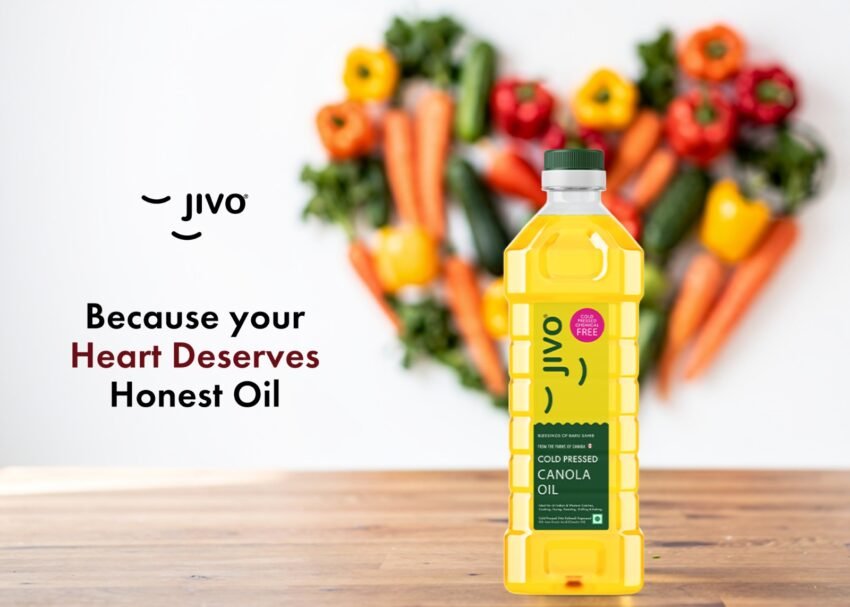
Because cold pressing skips the harsh chemical processing, cold pressed canola oil may be a good option to go with as it retains nutrient compared to highly processed canola oil. The cold-pressed version has a light taste that does not fight with Indian spices, and it performs reasonably well for sauteing and light frying without breaking down too quickly. Many households that switch from a heavily refined bottle to a cold pressed one also notice their food feels lighter, since the oil is not carrying leftover chemical residue that refining can leave behind.
When shopping, look for the words cold pressed clearly printed on the label, check the extraction date if it is mentioned, and store the bottle away from direct sunlight and heat to keep it fresh for longer. These small habits protect the very qualities that made you choose that bottle in the first place. Anyone building a genuine comparison of the best cooking oil for heart in India would want extraction method and storage practice sitting right next to fat content, not left out as an afterthought.
FAQs
Is “heart healthy” written on cooking oil labels always true?
Not entirely. It’s usually based on the oil’s raw fat content, not how it behaves once heated or reused — which is how most Indians actually cook.
What is the best cooking oil for heart health in India?
Look beyond the label. Check the extraction method, saturated fat content, and how the oil performs in your cooking style. Cold pressed oils with low saturated fat, like canola oil, are strong options.
Is omega 6 in cooking oil bad for the heart?
Not necessarily. Omega 6 is essential for the body, but an imbalanced omega 6 to omega 3 ratio, common among Indians, may affect cholesterol levels.
Does reheating or reusing cooking oil harm your heart?
Yes. Repeated heating breaks down oil through oxidation, which can create harmful compounds linked to oxidative stress in the body. Buying the best oil for heart and avoiding repeated heating is recommended.
Conclusion
Heart healthy labels are not lies, but they are not the complete truth either. The real story depends on how an oil is extracted, how it is used in your kitchen and how it behaves once it meets heat. Fancy packaging cannot undo poor extraction or years of reused frying oil, no matter how convincing the front label sounds.
If you are genuinely searching for the best cooking oil for heart, look past the packaging and focus on three things, extraction method, fat ratio and your own cooking habits. A few small changes, like switching oils based on cooking method, avoiding reused frying oil and choosing cold pressed over heavily refined options, can quietly protect your heart over the years without asking for a complete lifestyle overhaul. None of these changes are difficult or expensive, they simply require you to read labels a little more carefully than before and to trust your own judgement over a loud claim on the front of a bottle.
For families searching for the best cooking oil for heart patients in India, Jivo cold pressed canola oil is a smart, everyday choice that fits naturally into Indian cooking without asking you to compromise on taste. It brings together a lighter fat profile, gentler processing and a flavour that works well across all recipes. If you have been going back and forth trying to decide on the best cooking oil for heart, you need to try this oil.