
Ask five people whether ghee is healthy, and you will probably hear five different answers. Some won’t start a meal without it. Others avoid it completely because they have heard it is high in saturated fat. Even experts don’t always agree. Depending on who you ask, ghee is either a traditional superfood or something that should be consumed in moderation.
So where does the truth lie?
A review published in the Journal of Ayurveda and Integrative Medicine looked at this question by comparing what classical Ayurvedic texts say about ghee with what modern scientific research has found over the years. It’s the kind of study that’s worth reading before deciding what to believe.
Anyone searching for the best ghee brands in India is likely to come across plenty of health claims. This review helps put those claims into perspective by comparing traditional Ayurvedic knowledge with modern scientific evidence.
The scope of the comparison
According to the study, the researchers went through eleven major Ayurvedic texts, some dating back thousands of years, and recorded every mention of ghee they could find. In total, they curated close to 4000 references to milk and milk products, and 774 of these mentions were specifically linked to the therapeutic benefits of ghee, more than any other dairy product in the texts reviewed.
On the modern science side, the same study also reviewed research published on PubMed between 1990 and 2023. After removing duplicate and irrelevant papers, the researchers were left with 109 studies that met their criteria for inclusion. Comparing these two sets of information is really what makes this review interesting, because the areas of focus in each system turned out to be quite different.
Ayurveda gave more importance to cognitive health than modern research
Among all the benefits of ghee mentioned in the Ayurvedic texts reviewed, cognitive health appeared most frequently, accounting for roughly one in every five references. These classical texts commonly associate ghee with memory, mental clarity, and overall brain function.
Modern scientific research, however, has paid much less attention to this area. The review found that studies on cognition made up less than 10% of the PubMed research included. While a few smaller studies have explored individual components of ghee, such as short chain fatty acids and certain fats, and found possible links to brain-related benefits, there is still not enough direct research on ghee itself to draw firm conclusions. Memory and focus are also frequently highlighted while promoting the best ghee in India, but the current scientific evidence supporting these claims remains limited.
Modern research has paid little attention to digestion and nourishment
Digestive health is another area where Ayurveda places significant importance on ghee. In the texts reviewed, it appears among the most frequently mentioned benefit categories. Modern scientific research, however, has explored this topic far less. In fact, less than 1% of the studies included in the review focused on gastrointestinal health. The researchers found only one relevant study, which examined how ghee may influence blood sugar response when used while cooking rice.
A similar gap can be seen when it comes to nourishment. Ayurveda describes ghee as a Rasayana, a term used for substances believed to nourish body tissues and support long-term wellbeing. The review explains that modern research does not have a direct equivalent for this concept, making it difficult to compare the two approaches. This does not mean the Ayurvedic view is incorrect; it simply shows that dedicated research on this specific aspect is still limited. Claims about digestion often appear when people search for pure ghee online, but the current evidence suggests that more direct scientific studies are needed before those claims can be confirmed.
Ayurveda gives more importance to immunity and rejuvenation
Ghee is described in Ayurveda as a Rasayana, a category of substances associated with nourishing the body and supporting immunity over time, according to the study. This benefit group also appears among the more frequently mentioned categories in the Ayurvedic texts reviewed, but modern research on this specific angle remains limited by comparison.
A few smaller studies cited in the review did look at ghee-based formulations and immune function. One study on a ghee-based preparation reported immunity related effects in children, while another involving a herbal formulation prepared with ghee reported immune supportive activity in animal trials. A clinical trial on a related fatty acid found in ghee also reported a positive effect on immune response in adult participants over a defined study period. These are useful early findings, though the researchers are clear that they do not amount to conclusive evidence about ghee on its own.
ALSO READ: Health Benefits of A2 Cow Ghee: Why It’s the Best Ghee in India for Digestion and Immunity
Heart health remains the most researched but least settled area
While Ayurvedic texts give relatively little space to cardiovascular effects, this is actually the most researched area in modern science. According to the study, close to 27% of the PubMed papers reviewed focused on heart health, making it the single largest research category.
The findings within these studies are mixed rather than conclusive. Some trials reported an increase in cholesterol and triglyceride levels after ghee consumption, while others reported improvements in HDL levels along with reduced triglycerides. An earlier concern from the 1980s suggested that heating ghee could create cholesterol oxidation products linked to heart disease risk, but a later study cited in this review found these compounds were not detected in in fresh ghee clarified at 120 degrees Celsius. One epidemiological survey conducted in Rajasthan found lower rates of coronary heart disease among men who consumed more ghee monthly, while a separate case control study conducted in Pakistan found no clear link between daily ghee intake and coronary artery disease.
The researchers themselves point out that most of these studies had small sample sizes and were conducted over short durations. Their conclusion is that larger and longer clinical trials are needed before any firm statement can be made about ghee and heart health either way.
Skin healing shows the strongest agreement between both systems
One area where Ayurveda and modern research actually line up is wound healing and skin related benefits. The study reports that healing properties made up around 24% of the PubMed papers reviewed, and nearly all of them reported positive outcomes.
Formulations combining ghee with honey were found to support antibacterial activity and reduce scarring during wound healing, according to the studies cited in the review. Traditional ghee based preparations were also linked to faster wound closure and better tissue regeneration in some of the clinical research included. This overlap between old and new findings makes skin and wound care one of the more well supported benefit areas covered in the review.
ALSO READ: The Best Ghee in India for Skin Health
Different sources of ghee have different nutritional profiles
Something the Ayurvedic texts spend a lot of time on is the animal source of the milk used to make ghee. The researchers identified ten different types based on this classification alone, including cow, buffalo, goat, camel, sheep, and a few less common sources like mare and elephant milk, with each source believed to carry a different effect on the body according to traditional pharmacology.
When the study compared actual fatty acid data from these different milk sources, real differences did show up. One clear example mentioned in the review is that human milk fat has the lowest saturated fat content among all the sources compared, at close to 40%, while cow milk fat and buffalo milk fat come in noticeably higher, at around 65% and 67% respectively. This is one of the few places in the review where old classification and modern lab data point in a similar direction.
This is also part of the reason people researching the best ghee in India often come across so many variations, including cow ghee, buffalo ghee, and different processing methods. According to the composition data in this review, these differences are not just about taste or texture, they reflect real variation in fat content between sources.
What does this research mean for using ghee every day?
This review does not settle the long-running debate about ghee once and for all. Instead, it highlights that ghee may have therapeutic potential in areas such as cognitive health and gut function, but these topics are still relatively understudied. At the same time, cardiovascular health, despite being the most extensively researched area, continues to show mixed findings. The authors conclude that more high-quality clinical studies are needed before any firm conclusions can be drawn.
Many people searching for pure ghee online prefer products made using traditional methods. The review explains that the Ayurvedic texts consistently describe curd-based preparation as the standard method of making ghee and associate it with a wide range of therapeutic properties. At the same time, the authors point out that more scientific research is needed to better understand and validate many of these traditional observations.
The review also highlights that the method of preparing ghee is an important part of the discussion. In most of the classical Ayurvedic texts, fermentation before churning is described as a key step in the traditional process. Although this detail is rarely discussed today, the researchers consider it an important aspect of how ghee has traditionally been prepared.
When comparing the best ghee brands in India, it is worth looking beyond the claims on the packaging and understanding how the ghee is made. The review explains that the traditional curd-based method differs from quicker production methods that skip the fermentation stage. According to the Ayurvedic texts reviewed, the method of preparation is considered an important factor in the properties associated with ghee, although the authors note that further scientific research is needed to strengthen the evidence.
FAQs
Which is the best ghee in India?
The best ghee in India is one that is made from pure milk fat, follows strict quality standards, and contains no added vegetable oils or artificial ingredients. Choose a trusted brand that offers authentic and hygienically prepared pure ghee.
Is ghee healthy for daily consumption?
Yes, healthy ghee can be part of a balanced diet when consumed in moderation. It provides energy, fat-soluble vitamins, and adds flavour to meals, but excessive intake can increase calorie and saturated fat consumption.
How can I identify pure ghee?
Pure ghee should list only milk fat as its ingredient and should have a rich aroma, golden colour, and smooth texture. Buying from a reputable brand with FSSAI-compliant manufacturing is also important.
Is Bilona ghee healthier than regular ghee?
Bilona ghee can be a good choice when it is made using clean, carefully controlled and minimally processed methods, without industrial refining. Its traditional preparation through curd and churning may make it a preferred option for consumers looking for traditionally prepared ghee.
Conclusion
This review highlights that there is still much to learn about ghee. While Ayurvedic texts have described its sources, preparation methods, and traditional uses for centuries, modern scientific research has only begun exploring many of these areas and has focused mainly on cardiovascular health.
Rather than viewing Ayurveda and modern medicine as opposing approaches, the researchers suggest that traditional knowledge can help guide future scientific studies. As more high-quality research becomes available, our understanding of ghee and its potential health effects will continue to evolve.
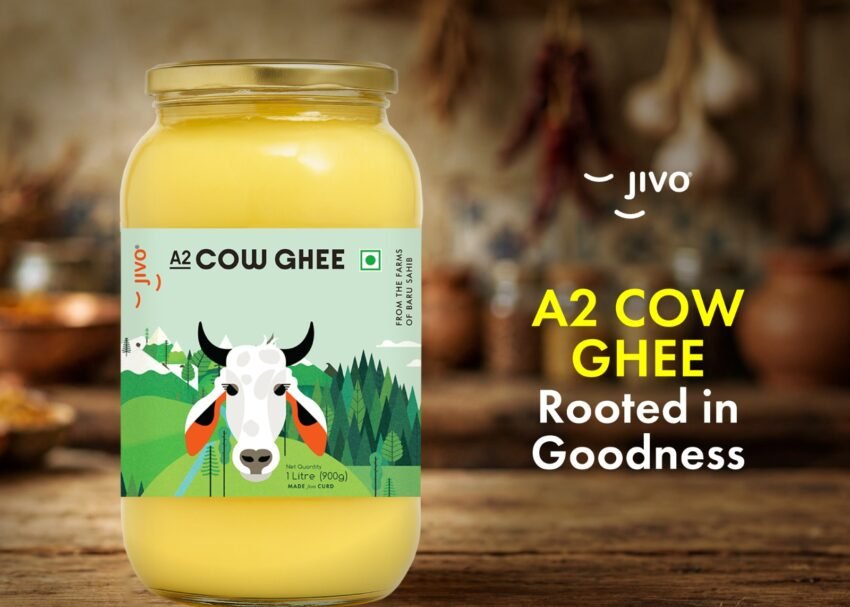
If you are looking for the best ghee in India, it is worth paying attention not only to the label but also to how the ghee is prepared. Jivo A2 Cow Ghee is made from desi cow milk through a multi-step preparation process. The milk is first converted into curd, which is then churned to separate the butter. The butter is subsequently clarified to produce ghee, resulting in a product suitable for everyday cooking and a variety of culinary applications.
ALSO READ: How Bilona Ghee Differs Biochemically from Industrial Ghee