
Many buy cooking oils without really understanding the fatty acid profile. Some are brand-conscious, while others are carried away by attractive labels. And this approach is not mindful buying. When you see an extra virgin olive oil bottle on a shelf, the first thing that strikes your mind is purity. But someone with a deeper understanding will think, “MUFA-rich.” The same applies to sunflower and soybean oils; they are high in PUFA. We often buy oils based on our parents’ choices. But this approach needs to change if you really want the right oil for your cooking and health. Now, deciding whether to buy a MUFA-rich or PUFA-rich oil is another concern. This confusion is extremely common, especially among people who are trying to manage their cholesterol or protect their heart. In this guide, we will break down what MUFA and PUFA actually mean, how they affect your heart, and how to choose the best cooking oil for heart in India based on your own needs, not just marketing claims.
What Do MUFA and PUFA Actually Mean
Before comparing the two, it helps to understand what these terms stand for.
MUFA stands for monounsaturated fatty acids. These are found in oils like olive oil, groundnut oil, mustard oil, and canola oil. PUFA stands for polyunsaturated fatty acids, and these are found in oils like sunflower oil, soybean oil, corn oil, and also in fish and flaxseeds.
Both MUFA and PUFA fall under the category of unsaturated fats, which is generally considered a healthier group compared to saturated fats found in ghee, butter, and coconut oil. The real debate is not about unsaturated versus saturated fat, since most doctors already agree unsaturated fats are the better choice. The debate is about which type of unsaturated fat, MUFA or PUFA, does more for your heart.
ALSO READ: What is MUFA (Monounsaturated Fat)?
Why This Question Matters So Much in India
Heart disease has become one of the leading cause of deaths in India, and many tend to develop cardiovascular problems at a younger age compared to people in many Western nations. Diet plays a massive role in this, and cooking oil is one of the biggest daily contributors of fat in an average Indian meal.
Since most Indian cooking involves generous amounts of oil, whether for tempering dal, frying snacks, or making curries, the type of oil used ends up having a real impact over time. This is exactly why so many people search for the best cooking oil for heart patients in India, hoping to make one simple swap that protects their health without changing their entire diet.
The Case for MUFA Rich Oils
MUFA rich oils have earned a strong reputation, largely thanks to the Mediterranean diet, which relies heavily on olive oil and has been linked to lower rates of heart disease in multiple long term studies. The Harvard T.H. Chan School of Public Health has highlighted how unsaturated fats (including the monounsaturated fats in olive oil) improve blood cholesterol levels and that replacing saturated fat with unsaturated fat is beneficial.
There are a few reasons MUFA rich oils are so well regarded.
They tend to raise good cholesterol, known as HDL, while lowering bad cholesterol, known as LDL. They are also more stable at high cooking temperatures, which matters a lot in Indian cooking where oil is often heated for frying or tempering. Oils that are more heat stable are less likely to break down into harmful compounds during cooking, which is a real concern with oils that oxidize quickly.
Mustard oil and groundnut oil, both popular in Indian households, fall into this MUFA rich category, which is one reason traditional Indian cooking has relied on them for generations, long before anyone knew the science behind fatty acids.
The Case for PUFA Rich Oils
PUFA rich oils have their own strong supporters, and for good reason. The American Heart Association has pointed out that polyunsaturated fats, when used to replace saturated fats, can meaningfully lower LDL cholesterol and reduce the risk of heart disease.
PUFA includes two important types, omega 6 and omega 3. The NIH mentions that Omega-3 fatty acids, found in fish oil and flaxseeds, are particularly valued for their role in lowering triglyceride levels and may also help support healthy heart rhythm in some individuals. Omega 6, found in sunflower and soybean oil, is also essential for the body, though most Indian diets already contain plenty of it.
One thing worth knowing here is that PUFA rich oils are less stable at high heat compared to MUFA rich oils. They oxidize more easily, and repeated heating, something that happens often in Indian kitchens during frying, can cause them to form compounds that are not great for your health. This does not mean PUFA oils are bad, it simply means they need to be used thoughtfully rather than heated over and over.
So Which One Is Actually Better for Heart Health
Here is where most articles online try to declare a clear winner, but honestly, the answer is not that simple. Both MUFA and PUFA rich oils may support heart health depending on the quality and consumption. The best approach is not to pick one and stick with it forever, but to use both in a balanced way depending on how you are cooking.
For high heat cooking like frying or deep frying, a MUFA rich oil such as mustard oil or groundnut oil holds up better and is less likely to oxidize into harmful byproducts. For lighter cooking, salad dressings, or finishing dishes, PUFA rich oils and sources of omega 3 like flaxseed can be genuinely valuable additions.
If you already have heart disease or high cholesterol, this balance becomes even more important. Many dietitians recommend getting your daily cooking fat from a MUFA rich oil, while separately including omega 3 sources like fish or walnuts in your diet for their specific cardiac benefits. This combination tends to work better than relying entirely on one type of fat.
For a deeper look at how to choose oils specifically if you are already managing a heart condition, this guide on the best cooking oil for heart patients in India walks through the considerations in more detail.
What About Low Saturated Fat and Cholesterol Free Oils
While shopping, you will notice many oil brands proudly label their products as cholesterol free. It is worth knowing that this label, while technically true, applies to almost every plant-based cooking oil in the market. Cholesterol only comes from animal sources, so no vegetable oil, whether it is sunflower, mustard, groundnut, or olive oil, naturally contains cholesterol. This label is not wrong, but it is also not something that sets one oil apart from another.
What actually matters more is the saturated fat content of the oil. A best low saturated fat oil in India would be one where saturated fat makes up a smaller percentage compared to the unsaturated fats, MUFA and PUFA combined. Oils like sunflower, canola, and mustard oil generally have lower saturated fat levels compared to coconut oil or palm oil, which makes them a better everyday choice for most households, especially where heart health is a concern.
Reading the nutrition label on the back of the bottle, rather than just the claims on the front, is genuinely one of the smartest habits you can build as a consumer. Look at the breakdown of saturated, monounsaturated, and polyunsaturated fat per serving, and compare a few brands before deciding.
A Word on Cold Pressed Oils
Another factor that often gets overlooked in the MUFA versus PUFA discussion is how the oil is extracted. Cold-pressed oils are obtained without the use of high heat or chemical solvents during extraction, helping preserve their natural flavour, aroma, and beneficial compounds compared to heavily refined oils.
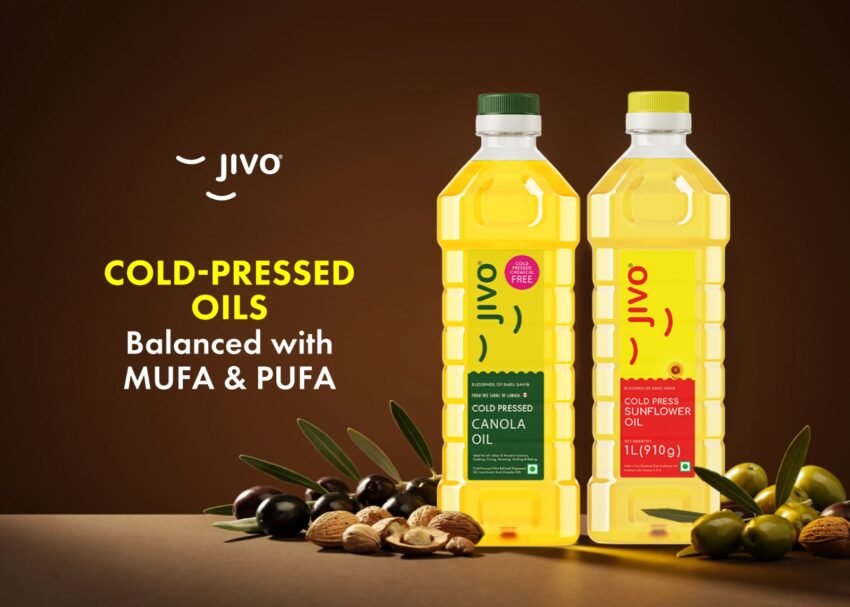
If you’re looking for a MUFA-rich cooking oil, Jivo Extra Virgin Olive Oil (EVOO) and Jivo Cold-Pressed Canola Oil are excellent choices. Both are naturally high in monounsaturated fats (MUFA) and low in saturated fat, making them suitable options for those looking to support a heart-conscious lifestyle. As imported oils sourced to meet high-quality standards, they offer a premium choice for everyday cooking, salad dressings, sautéing, and other culinary applications, depending on the oil’s recommended use.
For those who want to include more PUFA in their diet, Jivo Cold-Pressed Sunflower Oil provides a good source of polyunsaturated fats, including a balanced proportion of omega-3 and omega-6 fatty acids. It is also fortified with Vitamins A and D, adding nutritional value alongside its light taste and versatility in everyday cooking.
Rather than depending on a single oil for every recipe, consider choosing oils based on their fatty acid profile and intended cooking application. Using MUFA-rich oils such as Jivo Extra Virgin Olive Oil or Jivo Cold-Pressed Canola Oil for appropriate cooking methods, while including PUFA-rich options like Jivo Cold-Pressed Sunflower Oil in your kitchen, can help you enjoy the benefits of both types of healthy unsaturated fats as part of a balanced diet
Simple Tips to Keep in Mind While Buying Cooking Oil
Do not rely only on front of pack claims like heart healthy or cholesterol free, since these are common across most vegetable oils.
Check the saturated, MUFA, and PUFA breakdown on the nutrition label before buying.
Try to rotate between two or three oils rather than using just one for every single dish in your kitchen.
Avoid reusing oil multiple times for frying, since repeated heating breaks down the oil’s structure and creates harmful compounds, regardless of whether it is MUFA or PUFA rich.
Include natural omega 3 sources like flaxseeds, walnuts, or fish in your diet alongside your regular cooking oil.
If you have an existing heart condition, it is worth discussing your specific oil choice with your doctor or a dietitian, since factors like your cholesterol levels and other medications can influence what works best for you.
Top Best Cholesterol Free Cooking Oil for Heart Health in India – Cold Pressed Canola Oil
Conclusion
When it comes to choosing the best cooking oil for heart health, there isn’t a single oil that works best for everyone. Both MUFA and PUFA have their own benefits, and including a balance of both in your diet is a smarter approach than relying on just one type of oil. The key is to understand what you’re buying, read nutrition labels carefully, and choose oils that suit your cooking style and health needs.
Simple, everyday choices like using the right combination of oils, avoiding repeated heating, and maintaining a balanced diet can go a long way in supporting your heart over time.
Looking for oils that fit different cooking needs? Explore Jivo’s range of premium cold-pressed and imported oils, including Extra Virgin Olive Oil, Cold-Pressed Canola Oil, and Cold-Pressed Sunflower Oil. Whether you need a MUFA-rich or PUFA-rich option, Jivo offers thoughtfully crafted oils to help you make healthier choices in your everyday cooking.