
Cooking oil is the most common ingredient used in Indian cooking. It is found in almost every kitchen as we Indians prefer fried foods more, but often ignore the type of oil we are using and whether it is heart-healthy oil or not. Buying any cooking oil doesn’t ensure you are having the best cooking oil for heart health in India, you need to understand its fat composition. Our body needs certain amounts of fats but not in excess nor unhealthy ones. Cooking oils are basically fat-dominant, meaning, they contain fatty acids in varying proportions – monounsaturated fats (MUFA), polyunsaturated fats (PUFA), and saturated fats (SFA). If these fatty acids in oils are at the right balance and are unsaturated, they may improve heart health.
Let us understand what the cooking oils must have to support heart health.
Types of Fats in Cooking Oils
One needs to know about the fatty acids present in cooking oils. Before buying cooking oils, knowledge about saturated fats (SFA), monounsaturated fats (MUFA), polyunsaturated fats (PUFA), and trans fats is important.
Saturated Fats (SFA)
The fatty acid chain contains only single bonds between carbon atoms, with every carbon fully bonded to hydrogen atoms (no double bonds present). This straight chain allows the molecules to pack closely together. This is the reason that keeps SFA in solid state even at normal temperature.
Impact on heart health: Excess consumption of high saturated fat oils increase the bad (LDL) cholesterol in the blood, which leads to plaque build-up in the arteries. Blocked arteries raise the risk of heart disease and stroke.
The American Heart Association advises limiting saturated fats to less than 6% of daily calories. Excessive intake is associated with higher cardiovascular risk. It is recommended to use them in moderation and replace them with healthier fats where possible.
Monounsaturated Fats (MUFA)
The fatty acid chain has exactly one carbon-carbon double bond (with the rest single bonds). This single double bond introduces a bend in the chain, preventing tight packing.
Impact on heart health: Oils with significant amount of MUFA helps lower bad (LDL) cholesterol and may also maintain good (HDL cholesterol) when consumed in moderation. Replacing saturated fats with MUFA may help reduce inflammation, improves the overall cholesterol profile, and decreases the risk of cardiovascular disease. MUFA also help maintain oil’s stability during high-heat cooking. Oleic acid in MUFA is the main component that helps improve heart health. MUFAs in oil is a heart-healthy choice, which may help contribute to better long-term heart health.
Polyunsaturated Fats (PUFA)
The fatty acid chain contains two or more carbon-carbon double bonds. These multiple double bonds create bends in the chain. This group includes essential omega-3 and omega-6 fatty acids that the body cannot produce on its own.
Impact on heart health: They are highly beneficial for the heart. They reduce bad (LDL) cholesterol, lower triglycerides, decrease inflammation, and help maintain normal heart function. Research shows that replacing saturated fats with PUFA can significantly lower the risk of cardiovascular disease (often by 20–30%). They also support brain health, though a balanced intake of omega-3 and omega-6 is important.
Trans Fats
These are unsaturated fats (containing one or more double bonds), but the hydrogen atoms around the double bond are arranged in the trans configuration (on opposite sides), resulting in a straighter chain similar to saturated fats. Most trans fats are artificial, created through partial hydrogenation of oils. These are the notorious fats found in cooking oils that are considered unhealthy.
Impact on heart health: They are the most harmful to the heart. They raise bad (LDL) cholesterol, lower good (HDL) cholesterol levels, increase inflammation, and increases the risk of heart disease, stroke, and type 2 diabetes. Health authorities strongly recommend avoiding them as much as possible. Trans fats in cooking oils are banned in many countries.
A healthy oil profiles balanced MUFA and PUFA, with low saturated fats. Cold-pressed cooking oils are considered more healthier because of their unsaturated fats and the presence of natural nutrients in them. Cold-pressed oils with balanced fats, best if blends are rotated, are good for heart health as these oils may contribute towards the maintenance of cholesterol levels if consumed in moderation.
Also Read –
The Link Between Cooking Oils and Artery Stiffness: What You Need to Know
What are the Best Oils for Heart Health in India
Know about the best cooking oils for heart heart health in India.
Extra-Virgin Olive Oil (EVOO)
Extra-Virgin Olive Oil (EVOO) is considered the king of oils and regarded as one of the most heart-healthy oils. EVOO is also known as the best cooking oil for heart health when consumed in moderation in Indian kitchens. The heart benefits of using EVOO in cooking is due to the presence of balanced healthy fats and natural compounds that support cholesterol balance, helpful in protecting heart health.
Monounsaturated fats dominate EVOO’s fat profile, which is around 70% to 80%. Oleic acid is the main compound, usually referred to as monounsaturated omega-9 fatty acid. Extra Virgin Olive Oil (EVOO) typically contains between 55% and 83% oleic acid, which helps lower bad (LDL) cholesterol while maintaining good (HDL) cholesterol levels. It helps improve the overall lipid profile and reduces the build-up of plaque in arteries. This makes EVOO one of the best cooking oils for heart health in India.
What sets EVOO apart is the presence of polyphenols, comprising powerful antioxidants -hydroxytyrosol and oleocanthal. These compounds help reduce inflammation, lower blood pressure, improve the function of blood vessel linings (endothelial health), combat oxidative stress, and offer additional protection against cardiovascular issues. The fatty acids and polyphenols in EVOO, to some extent, help reduce the risks of heart disease, stroke, and heart-related conditions.
In an observational study published in The New England Journal of Medicine, affirmed inverse relation between consumption of extra virgin olive oil and cardiovascular disease risk.
The study included thousands of participants with higher risk of heart issues. They were on different diet, including extra virgin olive oil. Those who followed a Mediterranean-style diet with plenty of extra-virgin olive oil—around 4 tablespoons a day—ended up with roughly 30% fewer major heart events (like heart attacks, strokes, or cardiovascular deaths) compared to people on a standard low-fat diet.
Other research pulls together findings from many long-term studies and shows that regularly using olive oil is linked to lower chances of heart disease (about 16% less risk for every extra 25g—roughly 2 tablespoons—per day), plus benefits like better blood pressure control and less inflammation overall. It also ties into lower overall death rates from various causes.
In a clinical analysis, it was concluded that EVOO helps in maintain healthy arteries and reduces the risk of cardiovascular events.
For practical use, EVOO has a smoke point of 190–210°C (374–410°F), suitable for sautéing, roasting vegetables, light stir-frying, or drizzling over salads and dals—common in lighter Indian meals. Avoid very high-heat deep frying to preserve its nutrients. A good daily amount is 1–4 tablespoons (start with 1–2 for most people, around 15–50g), depending on your total calorie needs, to gain benefits without extra calories.
In short, swapping in EVOO for less healthy fats like butter or refined oils is a simple, tasty step toward better heart health—backed by strong research and increasingly popular in Indian homes for its proven advantages.
Also Read: Try Top 3 Best Types of Olive Oils in India for Healthy Cooking
Canola Oil
Canola oil is a practical and affordable everyday cooking oil that’s become quite popular in Indian kitchens for its versatility and solid heart benefits. It’s often highlighted as one of the best cooking oils for heart health in India because of its balanced fatty acid makeup that helps manage cholesterol without changing your cooking style too much.
The main strength of canola oil lies in its fatty acid composition: it’s very low in saturated fats (around 7%), high in monounsaturated fats (about 60-65%, mostly oleic acid—an omega-9 fatty acid similar to what’s in olive oil), and it provides a good amount of polyunsaturated fats (around 25-30%), including plant-based omega-3 (alpha-linolenic acid or ALA, about 9-11%). This mix helps lower “bad” LDL cholesterol and total cholesterol while supporting better overall lipid profiles. Oleic acid plays a big role here by stabilizing cell membranes, reducing inflammation, and improving how the body handles fats.
Research supports these effects strongly. In a clinical analysis, it was concluded that canola oil consumption significantly reduces total cholesterol, LDL cholesterol, and ratios like LDL/HDL compared to other oils (including sunflower or even olive in some comparisons) or saturated fats. For example, one large review found improvements in several cardiometabolic risk factors, with the best benefits when it replaces about 15% of daily calories from less healthy fats. Other studies note reductions in triglycerides, better blood pressure control in certain cases, and an overall drop in predicted cardiovascular risk.
In India, where heart issues are rising due to unhealthy lifestyle, canola oil can be helpful in reducing the heart conditions and may improve cooking experience. Experts often recommend it for everyday needs because it helps naturally manage cholesterol amid typical Indian meals.
Canola oil has a high smoke point of around 204–230°C (400–450°F), making it excellent for high-heat Indian cooking like deep-frying pakoras, stir-frying veggies, tadka, or even baking rotis. It doesn’t break down easily or produce harmful compounds at normal cooking temperatures.
A reasonable daily amount is 1–3 tablespoons (about 15–45g), depending on your total calorie intake—enough to get the benefits without adding extra calories. Start by swapping it in for oils higher in saturated fats (like palm or vanaspati), and you’ll likely see gradual improvements in cholesterol levels as part of a balanced diet.
Canola oil, especially the cold-pressed version, is a reliable and heart healthy oil that may be beneficial for managing cholesterol and reducing heart problems in India.
Also Read: What the Dietitian says – Why Cold-Pressed Canola Oil Supports Brain and Heart
Oils to Avoid for Heart Health
Choosing the best cooking oils for heart health in India is important, but know which oils to avoid is even more important. Oils high in saturated fats and those with even trace amounts of trans fats are to be completed avoided. These unhealthy fats are the prime factors that cause heart conditions.
Here are oils to avoid for healthy heart:
Vanaspati (Dalda or Hydrogenated Oils)
These are partially hydrogenated vegetable oils. They contain trans fats that are worst for your heart. Trans fats not only spike LDL cholesterol but also lower HDL cholesterol levels, triggering inflammation. Further, trans fats create conditions that adversely impacts heart health and also raise the risk of diabetes. Before buying oils, please check the label carefully for the term ‘trans fats.’ In India, trans fats in oils is limited to 2%. Even small amounts, trans fats are not good for heart health.
Palm Oil
Palm oil is the most commonly used edible oil in India, especially in restaurants. It’s cheap and is used in the preparation of processed foods, instant noodles, biscuits, and some commercial frying. Palm oil is about 50% saturated fat, which can raise LDL cholesterol and contribute to artery narrowing over time. If consumed in excess, it may cause serious heart problems.
Coconut Oil
Coconut oil is a popular South Indian oil, used for tempering, curries, or making idli batter. It contains high saturated fats, even more than butter. While it has medium-chain triglycerides, considered good for quick energy, it can still increase LDL cholesterol when used in excess. This oil needs to be used less amounts to avoid heart problems.
Highly-Processed Refined Oils
Even refined oils that are produced through chemical refining, high-heating, and solvent extraction, can impact heart health if consumed in excess. Some refined oils are high in saturated fats, which may raise bad cholesterol levels. It recommended to replace refined oils with cold-pressed oils. Cold-pressed oils are naturally extracted and contains unsaturated fats, including natural nutrients, beneficial for heart health.
FAQs
What is the best cooking oil for heart health in India?
Extra-virgin olive oil (EVOO) tops the list due to its high monounsaturated fats (70-80% oleic acid) that lower bad LDL cholesterol while preserving good HDL levels. Canola oil is a close second with low saturated fats (7%), high MUFA (60-65%), and omega-3s for everyday Indian cooking. Cold-pressed versions of both retain natural antioxidants for better cholesterol balance.
Is olive oil good for heart patients?
Yes, EVOO supports heart health with oleic acid and polyphenols like hydroxytyrosol that reduce inflammation, blood pressure, and plaque buildup in arteries. Studies show 2 tablespoons daily cuts cardiovascular risk by up to 30% in high-risk groups, making it ideal for light sautéing or drizzling on Indian dishes.
Buy Best Cooking Oil for Heart Health in India
To improve heart health, it is important that you make healthy choices, especially while buying cooking oils. Extra virgin olive oil and cold-pressed canola oil are, no doubt, good for heart health, but you can also opt for cold-pressed kachi ghani mustard oil. The healthy fats, especially monounsaturated fats, in these best oils for heart health, contain beneficial properties/compounds (oleic acid) that helps improve overall wellness by reducing inflammation.
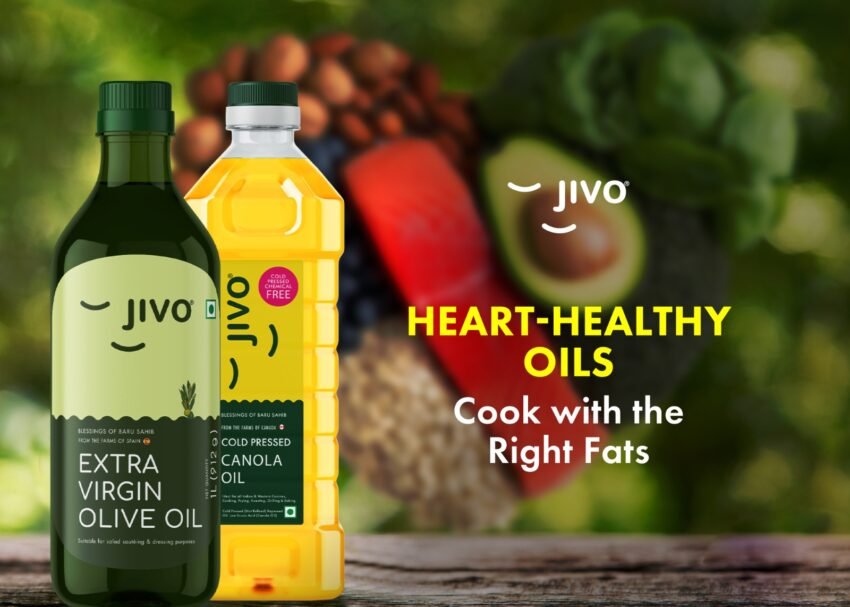
If you are looking for the best cooking oils for heart health, you can try Jivo’s extra virgin olive oil and cold-pressed canola oil for a few months and experience the difference.