
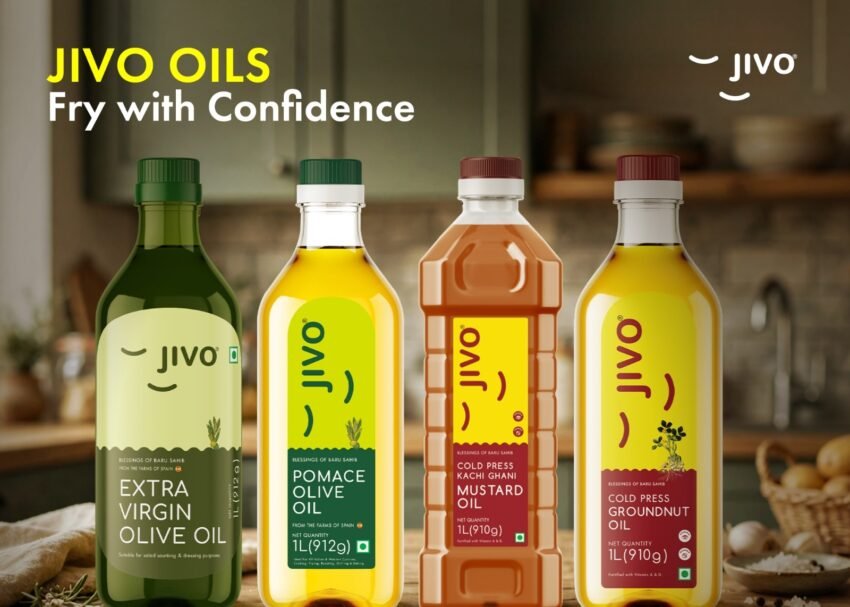
Indians love fried foods. From breakfast to dinner, samosas, chole bhature, deep-fried snacks, and even certain curries are popular choices. This is why many people look for the best cooking oil for frying in India. Some prefer kachi ghani mustard oil, others choose groundnut oil, while many try olive oil after reading about its health benefits. Yet, many still stand confused in the grocery store, wondering which oil performs best for frying chips, eggs, chicken, or fish.
If you think a single oil can do wonders for every frying need, it is time to rethink that belief. Rotating cooking oils is one of the best ways to bring variety to your diet and maintain a balanced fat intake.
The best cooking oil for frying depends on what you are cooking, how hot your kadhai gets, and what your family is used to eating. Let us break this down properly so you can make a choice that works best for your kitchen.
Why Frying Oil Choice Actually Matters
Before comparing olive oil, mustard oil, and groundnut oil, it helps to understand what actually makes an oil suitable for frying. After all, choosing the best cooking oil for frying is about much more than taste. The oil should be able to withstand high temperatures without breaking down quickly.
One of the first things to look at is the smoke point. This is the temperature at which an oil starts to break down and release smoke. Once that happens, the oil not only gives food a burnt taste but can also begin forming undesirable compounds. Oils with higher smoke points generally perform better for Indian cooking, especially when preparing dishes like puri, bhajiya, pakoras, and samosas that require the oil to stay hot and stable for an extended period.
Remember, even the best cooking oils in India can degrade when heated beyond their smoke point, so maintaining the right frying temperature is just as important as choosing the right oil.
Another factor worth considering is the oil’s fatty acid composition. Oils that are naturally rich in monounsaturated fatty acids (MUFA) tend to be more heat stable during frying. Oils like mustard oil, groundnut oil, and olive oil are all naturally good sources of MUFA, making them suitable choices for everyday cooking and frying.
Understanding these two factors makes it much easier to compare the three oils fairly. Let us now look at each one in detail.
ALSO READ: Why is the Smoke Point of Cooking Oils Important?
Olive Oil for Frying
Olive oil is becoming popular in Indian kitchens. If bought from reputed oil brands, olive oil can prove beneficial. When it comes to frying, many people are still unsure about which type of olive oil would be suitable. If you are searching for the best cooking oil for frying, it is important to know that not every bottle of olive oil is meant for high-heat cooking. Choosing the wrong one can affect both your cooking results and your budget.
For Indian frying, two types of olive oil are commonly recommended: pomace olive oil and extra light olive oil.
Pomace Olive Oil
Pomace olive oil is produced from the leftover olive pulp after the first mechanical extraction. The remaining oil is extracted using an approved food-grade solvent, then refined before being sold. Because of its neutral flavour, high smoke point, and lower price, pomace olive oil is a practical choice for deep frying and everyday Indian cooking.
Extra Light Olive Oil
Another option is extra light olive oil, which is refined from virgin olive oil that does not meet the quality standards for flavour or acidity required for virgin-grade oils. The word “light” refers only to the oil’s mild taste and lighter colour, not to its calories or fat content. It also has a high smoke point, making it suitable for frying, although it is usually priced slightly higher than pomace olive oil.
On the other hand, extra virgin olive oil is generally not the ideal choice for deep frying. Its smoke point typically ranges from 177 to 210 degrees Celsius, depending on the oil’s quality and acidity. More importantly, its distinctive flavour and naturally occurring antioxidants are best enjoyed without prolonged high heat. It is better suited for salad dressings, dips, or drizzling over cooked dishes rather than heating in a kadhai.
Among the best cooking oils in India, olive oil can certainly be a good option for frying provided you buy from best oil brands in India. If your primary purpose is deep frying or everyday high-heat cooking, look for pomace or extra light olive oil on the label instead of extra virgin olive oil.
Mustard Oil for Frying
Mustard oil has been a part of Indian kitchens for generations, especially in eastern and northern states. Its bold aroma and distinctive flavour are difficult to miss, which is why it remains a favourite for everything from Bengali fish curry to Punjabi vegetables and traditional Rajasthani pickles.
If you are looking for the best cooking oil for frying, mustard oil deserves serious consideration. With a smoke point of around 250 degrees Celsius, it can comfortably handle the high temperatures needed for deep frying. Whether you are making puris, pakoras, samosas, or fish, mustard oil remains stable under heat and delivers the rich flavour that many Indian households enjoy.
Another reason mustard oil stands out is its nutritional profile. It is naturally rich in monounsaturated fats (MUFA) and also contains omega-3 fatty acids, a combination that is less common among many everyday cooking oils. This balance makes mustard oil a popular choice for regular cooking as well as frying.
Of course, its strong aroma is not for everyone. Some people love the sharp, pungent flavour, while others prefer something milder. To reduce its raw pungency, many Indian home cooks traditionally heat mustard oil until it just begins to smoke, switch off the flame, allow it to cool slightly, and then start cooking. This simple step helps mellow the flavour without changing the way the dish is prepared.
Among the best cooking oils in India, mustard oil continues to be a trusted option for people who enjoy its authentic taste and need an oil that performs well during high-heat cooking.
ALSO READ: What Happens When You Don’t Get Enough Omega-3 Fatty Acids?
Groundnut Oil for Frying
Groundnut oil, also known as peanut oil, has been used in Indian homes for generations, especially across western and southern India. Its mild, slightly nutty flavour lets the taste of the food come through, which is why many families use it for everything from pooris and pakoras to fish and chicken. If you are looking for the best cooking oil for frying, groundnut oil is worth considering for everyday Indian cooking.
Refined groundnut oil typically has a smoke point between 220 and 230 degrees Celsius. This is well above the temperature used for most home frying, which usually ranges between 160 and 175 degrees Celsius. It also contains a balanced mix of monounsaturated (MUFA) and polyunsaturated (PUFA) fats, helping the oil stay stable during frying.
Groundnut oil is also commonly used during festivals and family gatherings when several batches of snacks are fried one after another. If the oil has been filtered properly and has not been overheated, many home cooks use it for a second round of frying. However, like any cooking oil, it should not be heated repeatedly over multiple cooking sessions.
When people compare the best cooking oils in India, groundnut oil is often appreciated for its mild flavour and the way it adapts to a wide range of Indian dishes without changing their original taste.
ALSO READ: Cold Pressed Groundnut Oil What Nutrition Science Says About Refined vs Unrefined Oils
Quick Comparison for Indian Frying
| Oil | Approximate Smoke Point | Flavour | Best Suited For |
| Pomace Olive Oil | Around 238°C | Very mild and neutral | Deep frying, pan frying |
| Extra Light Olive Oil | Around 242°C | Extremely light and subtle | Shallow frying, pan-frying, and baking |
| Mustard Oil | Around 250°C | Strong, pungent | Deep frying, tempering, pickling |
| Groundnut Oil | 220°C to 230°C | Mild, nutty | Deep frying, sautéing, festive cooking |
So Which One Should You Actually Choose?
By now, you have probably guessed that there is no single answer. All three oils can handle the temperatures used for Indian frying. The better choice depends on your taste preferences, your budget, and the kind of food you cook most often. If you are looking for the best cooking oil for frying, these factors matter more than simply picking one oil over another.
If the familiar aroma of mustard oil has always been part of your cooking, it makes sense to continue using it for frying. Its high smoke point and bold flavour pair naturally with many traditional Indian recipes.
Groundnut oil has a much milder taste. If you want the flavour of the filling or batter to stand out instead of the oil, it can be a good fit for everyday frying. It is also usually more affordable than olive oil.
If olive oil is your preference, choose pomace olive oil or extra light olive oil for frying. Extra virgin olive oil is better saved for salad dressings, dips, or drizzling over cooked food, where its flavour and naturally occurring compounds can be appreciated without prolonged heating.
When comparing the best cooking oils in India, the smartest approach is to choose the oil that matches both your recipe and your cooking style instead of expecting one oil to suit every dish.
The Bigger Health Picture
While comparing smoke points and flavours is useful, it is worth zooming out a bit. The ICMR NIN Dietary Guidelines for Indians 2024 actually recommend against relying on a single cooking oil for years altogether. Instead, they suggest rotating between two or three oils over time, since no single oil supplies every fatty acid your body needs. Sunflower oil brings vitamin E, mustard oil brings a better omega 3 balance, and oils like groundnut and olive contribute healthy monounsaturated fat.
The same guidelines also point out something that is easy to forget in this whole oil debate. Even the healthiest oil is still calorie dense, and how much oil you use matters just as much as which oil you use. Repeated deep frying and reusing the same oil too many times can do more harm than the choice of oil itself.
So rather than hunting for one perfect healthy oil, a more practical approach for Indian households is to keep two oils in rotation, such as mustard oil for regular cooking and groundnut or olive oil for occasional frying, while being mindful of the quantity used.
Conclusion
Finding the best cooking oil for frying is not about proving that one oil is better than the others. Mustard oil, groundnut oil, and olive oil all have their own place in Indian cooking. The right choice depends on the recipe, the flavour you enjoy, and the way you cook at home.
Rather than following food trends or choosing an oil because it is popular, take a moment to understand where each one performs best. A little knowledge goes a long way in helping you make better decisions in the kitchen.
The next time you are about to fry pakoras, samosas, fish, or pooris, you will know which oil suits the recipe instead of reaching for the nearest bottle.
If you are exploring the best cooking oils in India, Jivo’s range of cold-pressed oils is worth considering. Jivo’s groundnut and mustard oils are not only suitable for frying but are also fortified with vitamins A and D. Jivo’s pomace and extra light olive oils are imported from Spain, a place known for its high-quality olive farms. Make sure you pay for quality rather than getting misguided by marketing claims.
You may also try cooking oils for frying, free of cholesterol and trans fats, available to order online from Zepto and Blinkit for quicker delivery: Jivo EVOO and Extra Light Olive Oil.