
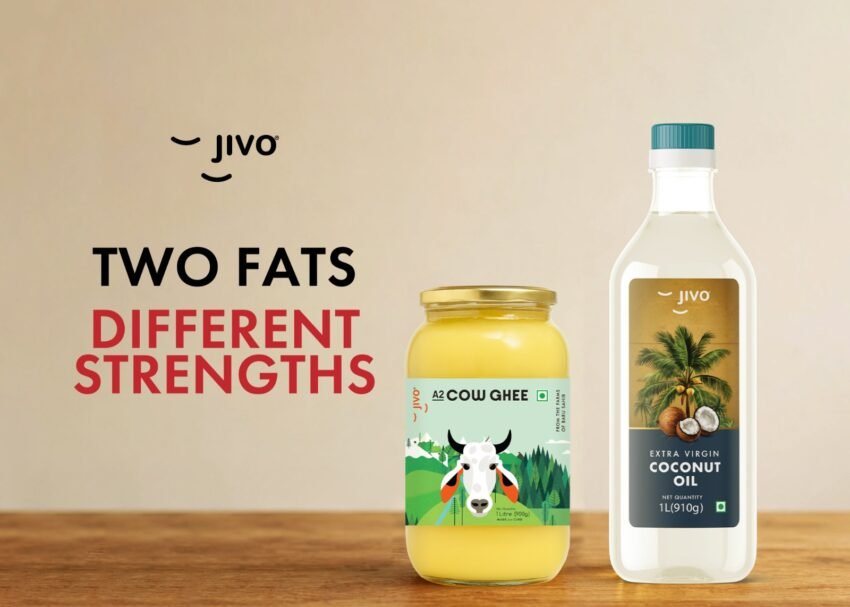
North for ghee and south for coconut oil. This contrasting preference is quite evident in India. Elder parents prefer ghee for preparing dal and sweets. Some fitness-conscious trusts coconut oil because Kerala cuisine and keto diets have gained popularity and are often considered healthy. Both contain beneficial fats backed by science, making them preferred choices for cooking and spreads. I tried both A2 cow ghee and virgin coconut oil side by side, and here is what I found. I discovered a few differences that will truly change how you cook your daily meals. For some, it might even change what lands in your cart the next time you go looking for the best ghee in India or a good coconut oil. Let us go through the compelling details that might change your mind or make you more confident when buying the best oil for daily cooking.
Why This Comparison Actually Matters
When both edible oils have proven benefits, there’s always a scope for comparative analysis. Ghee in India is been used for thousand of years, and even Ayurveda notifies it as sattvic food, which means – its pure and nourishing. Ghee has long been a staple in North Indian cooking, while coconut oil has always been common in Kerala, Tamil Nadu, and other coastal states.
Despite claiming regional popularity, both oils have gained national interest with regards to their cooking and health benefits.
Some prefer coconut oil for keto diets. Wellness brands push A2 ghee for gut health. Somewhere in between, people forgot that these fats simply do different jobs.
These fats are not designed for the same purpose. Ghee tolerates higher cooking temperatures, whereas virgin coconut oil is better suited to recipes that require gentle heat or where its coconut flavour is part of the dish.
A better way to compare them is to look at where each one fits in your kitchen. That is exactly what the rest of this guide explains.
1. How Each One Is Actually Made
A2 ghee is prepared from the milk of indigenous cow breeds such as Gir, Sahiwal, and Rathi, which naturally produce A2 beta-casein protein. In the traditional bilona method, the milk is first converted into curd. The curd is then hand-churned to obtain butter, which is slowly heated to produce ghee. Since the process involves multiple steps and requires more time and milk, authentic bilona ghee is generally priced higher than commercially produced ghee.
Virgin coconut oil is made differently. Fresh coconut meat is crushed to extract coconut milk, and the oil is separated without high heat or chemical refining. Because of this, the oil retains its natural coconut aroma and flavour. Unlike refined coconut oil, it does not undergo bleaching or deodorising.
Although both products are minimally processed, their manufacturing methods are completely different. Understanding how they are made gives a better idea of what sets them apart before comparing their cooking performance or nutritional profile.
2. Smoke Point and What It Means for Your Tadka
One of the biggest differences between A2 ghee and virgin coconut oil is their smoke point. Ghee has a smoke point of around 232 to 252 degrees Celsius, making it suitable for high-heat cooking such as tadka, sautéing, and deep frying. It remains stable at temperatures commonly used in Indian cooking.
Virgin coconut oil has a lower smoke point of about 175 degrees Celsius. At higher temperatures, it begins to break down sooner than ghee. Once any cooking fat is heated beyond its smoke point, its flavour starts to change and undesirable compounds may form.
For recipes that involve high heat, such as frying, roasting papads, or preparing a tadka for dal, ghee is generally the better choice. Virgin coconut oil is more suitable for low- to medium-heat cooking or recipes where its natural coconut flavour complements the dish.
3. Fat Composition and What It Does Inside Your Body
Both fats lean heavily on saturated fat, though the type of saturated fat is not identical. Ghee carries around 50 percent saturated fat alongside conjugated linoleic acid and small amounts of omega fatty acids, while coconut oil runs closer to 90 percent saturated fat. Coconut oil does bring something unique to the table though, since roughly 46 to 54 percent of its fat is made up of lauric acid, a medium chain fatty acid that the body processes somewhat differently from longer chain fats, according to a peer reviewed review on medium chain triglycerides published on the NIH’s PMC database. This is exactly the reason so many people searching for the best coconut oil online end up reading about MCTs before they even compare brand names. Ghee, on the other hand, is a natural carrier of fat soluble vitamins A, D, E, and K, and it also contains butyric acid, which several nutrition sources connect to gut lining support and easier digestion. None of this means either fat is a miracle cure, and if you have cholesterol concerns or a heart condition, it is worth discussing your daily fat intake with a doctor or dietitian rather than relying only on blog posts, including this one, for that decision.
4. Taste, Aroma, and How They Change a Dish
One of the biggest differences between A2 ghee and virgin coconut oil is the flavour they bring to food. Ghee develops a rich, nutty aroma during the final stage of preparation when the milk solids are gently browned. That distinctive flavour is why many people consider it the best ghee in India for finishing dal, khichdi, rotis, and even traditional sweets.
Virgin coconut oil offers a light coconut aroma that is naturally suited to dishes such as thoran, appam, Kerala curries, and coastal fish recipes. It adds a subtle flavour without overpowering the other ingredients.
These two fats are not interchangeable. Replacing one with the other changes the taste of the dish, even if the cooking method remains the same. A Gujarati dal and a Kerala avial, for example, rely on completely different flavour profiles. Choosing the right cooking fat is just as important as choosing the right spices, whether you are comparing the best coconut oil or looking for the best ghee in India for your everyday kitchen.
5. Shelf Life and How Each One Handles Your Pantry
Ghee has a naturally long shelf life because most of its water and milk solids are removed during preparation. When stored in a clean, airtight container and handled with a dry spoon, it can remain fresh at room temperature for several months. This is one of the reasons many households prefer investing in the best ghee in India, especially for everyday cooking.
Virgin coconut oil behaves differently. It solidifies at temperatures below 24 degrees Celsius and turns back into liquid when the temperature rises. This is a natural characteristic of coconut oil and does not mean the product has spoiled.
To maintain the quality of both products, store them in a cool, dry place away from direct sunlight and heat. If you use coconut oil occasionally, buying a smaller pack may be a practical choice, particularly during hot and humid weather. It helps preserve freshness and allows you to finish the oil before opening a new bottle, whether you choose the best coconut oil for cooking or for personal care.
6. Uses Beyond Just Cooking
Ghee and virgin coconut oil are valued for more than their role in cooking. In many Indian households, ghee is also used as a traditional home remedy. Some people apply it to dry skin, while others include it in certain Ayurvedic practices. It is also commonly used for baby massage in many families, although practices may vary.
Virgin coconut oil has a wide range of everyday uses beyond the kitchen. It is commonly applied to the hair, used as a moisturiser for dry skin, added to homemade body scrubs, or used as a carrier oil during scalp massages. Many people also prefer it as a natural makeup remover.
For skincare and haircare, most people look for the best extra virgin coconut oil because it is unrefined and retains its natural properties. Whether you keep it in the kitchen or on your dressing table, virgin coconut oil is one product that serves more than one purpose.
7. Price and Everyday Value for Indian Households
A2 bilona ghee is usually more expensive than regular ghee, mainly because of the way it is produced. Around 25 to 30 litres of milk are required to make 1 kilogram of hand-churned bilona ghee, and the traditional process also takes more time and effort. As a result, authentic bilona ghee in India is commonly priced between approximately between ₹900 and ₹1,800 for a 500 ml pack (price may vary).
Virgin coconut oil is generally more affordable. Coconuts are widely available in many parts of India, and the extraction process is less resource-intensive than producing bilona ghee.
When comparing the best ghee in India, price should be considered along with the manufacturing method, ingredient list, and brand reputation. An unusually low price may indicate a different production process or a lower-quality product. Looking beyond the front label helps you make a more informed choice.
Try Jivo A2 Cow Ghee and Extra Virgin Coconut Oil for Your Kitchen
If you are looking for both products from a trusted brand, Jivo offers A2 Cow Ghee and Extra Virgin Coconut Oil for everyday cooking.
Jivo A2 Cow Ghee is prepared from milk sourced from indigenous cows through a multi-step process that involves converting the milk into curd, churning the curd to separate butter, and clarifying the butter to produce ghee. It is available in 500 ml and 1 litre packs. Based on a wholesale listing, the 1 kg pack is priced at around rupees 1,199, while the 500 ml pack is generally available for around ₹649, although prices may vary across sellers.
Jivo Extra Virgin Coconut Oil is cold pressed and unrefined, making it suitable for both cooking and personal care. According to the official Jivo store, the 500 ml bottle is priced at rupees 269 against an MRP of rupees 399, while the 1 litre bottle is available for rupees 519.
Whether you are looking for the best ghee in India or the best extra virgin coconut oil for your daily routine, Jivo offers both under one brand. Since prices and offers change from time to time, it is always a good idea to check the latest rates on the official Jivo website before placing your order.
Conclusion
A2 ghee and virgin coconut oil both have a place in an Indian kitchen, but they are not meant to replace each other. Ghee is better suited to high-heat cooking and adds a rich flavour to traditional dishes, while virgin coconut oil is a good choice for recipes that benefit from its mild coconut aroma and for everyday personal care.
The right choice depends on how you cook, the dishes you prepare, and your personal preferences. If you are looking for the best ghee in India and extra virgin coconut oil, look beyond the packaging. Check the manufacturing method, ingredient list, quality certifications, and brand reputation before making a purchase.
No single cooking fat is perfect for everyone. If you have high cholesterol, heart disease, or any other medical condition, consult your doctor or a registered dietitian before making significant changes to your diet. Choosing the right cooking fat is about making an informed decision, not following trends.
You may also try cooking oils free of cholesterol and trans fats, available to order online from Zepto and Blinkit for quicker delivery: Jivo EVOO and Extra Light Olive Oil.