
Introduction
When buying cooking oil, many people focus on the type of oil, such as mustard, sunflower, groundnut, canola, or olive oil. However, if you look closely at the label, you may also notice Vitamin E, or tocopherols. This often raises a common question: Why is Vitamin E added to cooking oil? Is it there to improve nutrition, increase shelf life, or serve another purpose?
The answer is more interesting than it may seem. Vitamin E plays different roles depending on whether it is naturally present in the oil or added during manufacturing. It is widely recognised as an essential nutrient for the human body, but in the food industry, it is also valued for helping protect oils from oxidation, a natural process that can gradually affect their quality during storage. This is why Vitamin E is often described as both an antioxidant and a food additive, which can sometimes confuse consumers.
In this blog, we will learn what Vitamin E does in cooking oil, whether every edible oil contains it, how it differs from a preservative, and what names to look for on food labels.
What Is Vitamin E in Cooking Oil?
Vitamin E is a fat-soluble vitamin found naturally in many plant-based foods, including vegetable oils, nuts, seeds, and green leafy vegetables. In cooking oils, it is present in the form of a group of natural compounds called tocopherols and tocotrienols. These compounds are known for their antioxidant properties, which help protect oils from oxidation when exposed to air, light, and heat.
The amount of Vitamin E in cooking oil depends on several factors, including the type of oil, the crop variety, and how the oil is processed. Some oils naturally retain more Vitamin E than others, while refining and prolonged heating can reduce its levels. In certain cases, manufacturers may also add Vitamin E after processing to help maintain the oil’s quality during storage.
Whether naturally present or added, Vitamin E has become a familiar ingredient on many edible oil labels. Understanding why it is there help consumers make better sense of the information printed on food packaging.
ALSO READ: Tocopherols in Cooking Oils Explained
Understanding Vitamin E (Tocopherols) in Simple Terms
When people hear the term Vitamin E, they usually think of a nutrient that supports the body. While that is true, Vitamin E is actually a family of naturally occurring compounds rather than a single substance. The most common members of this family are tocopherols and tocotrienols, both of which are found in varying amounts in edible oils and other plant-based foods.
Among these, alpha-tocopherol is the form that contributes most to the body’s Vitamin E requirements. However, in cooking oils, different types of tocopherols work together to help slow down oxidation, which is why they are often referred to collectively on ingredient labels.
If you notice terms such as mixed tocopherols, tocopherol-rich extract, or simply Vitamin E, they all refer to compounds from the Vitamin E family. Depending on the product, these may be naturally present in the oil or added during manufacturing.
Is Vitamin E Naturally Present or Added to Cooking Oils?
The answer is both, depending on the type of cooking oil and how it is processed.
Many edible oils naturally contain Vitamin E because it is found in the seeds or fruits from which the oil is extracted. For example, sunflower, canola, soybean, rice bran, and olive oils naturally contain different forms of tocopherols.
During processing, especially refining, some of the naturally occurring Vitamin E may be reduced. To help protect the oil from oxidation during storage, manufacturers may add back tocopherols or other approved antioxidant ingredients. When this happens, Vitamin E is serving a technological purpose by helping maintain the oil’s quality.
This is why two bottles of the same type of cooking oil may not contain the same amount of Vitamin E. It depends on the manufacturing process, formulation, and whether additional tocopherols have been included.
ALSO READ: Best Air Fryer Oil: Why Vitamin-Fortified Cold-Pressed Oils Are the Best Choice
Which Cooking Oils Naturally Contain More Vitamin E?
Different cooking oils contain different amounts and types of naturally occurring Vitamin E. The exact level depends on the oilseed, growing conditions, and processing methods, but some oils are generally recognised as richer natural sources than others.
Some commonly used cooking oils that naturally contain Vitamin E include:
- Sunflower oil: Contains good levels of alpha-tocopherol.
- Rice bran oil: Contains both tocopherols and tocotrienols.
- Canola oil: Provides a good amount of tocopherols along with a favourable unsaturated fat profile.
- Soybean oil: Naturally contains several forms of tocopherols.
- Olive oil: Contains Vitamin E, primarily alpha-tocopherol, although the amount varies depending on the olive variety and processing.
- Groundnut (peanut) oil: Contains moderate levels of naturally occurring Vitamin E.
It is worth remembering that natural Vitamin E levels can decrease during refining, prolonged storage, or repeated heating. That is why some manufacturers may include additional tocopherols to help preserve the oil’s quality until it reaches consumers.
Why Is Vitamin E Added to Cooking Oil?
Not every bottle of cooking oil contains added Vitamin E, but when manufacturers include it, the purpose is usually practical rather than nutritional. In the food industry, Vitamin E is valued for its ability to act as an antioxidant, helping slow down the oxidation of oils during processing and storage.
Cooking oils naturally react with oxygen over time. This reaction, known as oxidation, becomes faster when oils are exposed to air, light, heat, or repeated opening of the bottle. As oxidation progresses, the oil may gradually develop an unpleasant smell or taste, a process known as rancidity.
By adding approved forms of Vitamin E, such as tocopherols, manufacturers can help protect the oil from this natural process. This allows the oil to maintain its quality for longer under recommended storage conditions. However, Vitamin E is only one part of the equation. Proper refining, suitable packaging, limited exposure to light, and correct storage also play an important role in preserving oil quality.
Preventing Oxidation and Rancidity
Fresh cooking oil is generally clear, has a pleasant aroma, and performs well during cooking. Over time, however, oxygen in the air reacts with the unsaturated fats present in the oil. This natural chemical reaction is called oxidation.
As oxidation continues, it forms compounds that can change the oil’s smell, flavour, and overall quality. This deterioration is commonly referred to as rancidity. Factors such as exposure to sunlight, high temperatures, repeated opening of the bottle, and long storage periods can speed up this process.
Vitamin E, particularly in the form of tocopherols, helps slow oxidation by reacting with free radicals before they can damage the oil. This antioxidant action delays the formation of oxidation products, allowing the oil to retain its quality for a longer period under suitable storage conditions.
It is important to understand that Vitamin E does not stop oxidation completely. Instead, it slows the process, which is why storing cooking oil in a cool, dry place and keeping the bottle tightly closed remains equally important.
Supporting Shelf Life Without Changing the Oil’s Taste
One reason Vitamin E is widely used as an antioxidant is that it performs its role without significantly affecting the oil’s natural flavour, aroma, or appearance when used at approved levels.
Unlike some additives that alter taste or texture, tocopherols are effective in very small quantities. Their primary function is to delay oxidation rather than change the characteristics of the oil. This makes them suitable for a wide range of edible oils, including those used for everyday cooking.
It is worth noting that shelf life depends on many factors, not just the presence of Vitamin E. The type of oil, refining process, packaging material, storage temperature, and handling after opening all influence how long a cooking oil maintains its quality. Vitamin E simply provides an additional layer of protection against oxidation.
Is Vitamin E an Antioxidant?
Yes. Vitamin E is a naturally occurring antioxidant, and this is one of the main reasons it is found in many edible oils. Whether it occurs naturally in the oil or is added during manufacturing, its primary function is the same: to help slow down oxidation, a chemical reaction that gradually affects the quality of oils.
To understand why this matters, imagine cutting an apple and leaving it on the kitchen counter. After some time, the surface starts turning brown because it reacts with oxygen in the air. Cooking oils go through a similar process, although it is not visible in the same way. Over time, oxygen reacts with the fats in the oil, causing changes in its smell, flavour, and freshness. This process is called oxidation.
Vitamin E helps slow this reaction by neutralising free radicals before they can damage the fats in the oil. It does not stop oxidation completely, but it delays the process, allowing the oil to retain its quality for longer when stored under recommended conditions.
Helping Maintain Oil Quality During Storage
Cooking oil may spend several weeks or even months moving from the manufacturing plant to warehouses, retail stores, and finally to consumers’ kitchens. Throughout this journey, the oil can be exposed to varying temperatures and small amounts of oxygen each time the bottle is opened.
Adding Vitamin E helps reduce the rate at which oxidation occurs during this storage period. As a result, the oil is more likely to retain its original colour, aroma, and flavour until it is used within its recommended shelf life.
However, manufacturers do not rely on Vitamin E alone. Oil quality is also protected by using food-grade packaging that limits light exposure, sealing bottles to minimise contact with air, and recommending storage away from direct sunlight and heat. Together, these measures help maintain the overall quality of the product.
How Antioxidants Protect Oils from Oxidation
Cooking oils naturally contain fats that react with oxygen when exposed to air, light, or heat. During this reaction, unstable molecules known as free radicals are formed. These free radicals trigger a chain reaction that gradually breaks down the fats in the oil.
Antioxidants such as Vitamin E interrupt this chain reaction. They donate a hydrogen atom to free radicals, making them more stable and reducing further damage to the oil. In simple terms, Vitamin E acts like a protective shield that slows the chemical changes responsible for rancidity.
This protective effect is especially useful during storage and normal household use. However, antioxidants have a limited capacity. Once they are used up, oxidation continues naturally, which is why even unopened cooking oils have a defined shelf life.
Why Polyunsaturated Fats (PUFAs) Need More Oxidation Protection
Polyunsaturated fats (PUFAs) contain two or more double bonds in their chemical structure. These double bonds make them more susceptible to oxidation than monounsaturated fats (MUFAs) or saturated fats. As a result, oils that naturally contain higher amounts of PUFAs generally require greater protection from oxidation during processing and storage.
This does not mean that PUFAs are undesirable or unsafe. In fact, they are recognised as an important part of a balanced diet. It simply means they are chemically less stable when exposed to oxygen, light, and heat.
Because of this, manufacturers may use antioxidants such as tocopherols to help slow oxidation in oils containing higher levels of unsaturated fats. Along with appropriate packaging and storage, antioxidants contribute to maintaining the oil’s quality until it reaches consumers.
ALSO READ: Top 10 Cooking Oils High in Polyunsaturated Fats
Does Vitamin E Improve Cooking Performance?
Vitamin E is added primarily to protect the oil during storage, not to improve its cooking performance.
Many people assume that because Vitamin E is an antioxidant, it makes cooking oil more suitable for high-temperature cooking. In reality, cooking performance depends on several factors, including the type of oil, its fatty acid composition, smoke point, refining process, and how the oil is used.
During cooking, especially at high temperatures, Vitamin E gradually breaks down and loses its antioxidant activity. This means it cannot continue protecting the oil indefinitely while it is being heated. Repeated heating or prolonged frying will eventually reduce the amount of Vitamin E present in the oil.
For everyday cooking, the best approach is to choose an oil that suits your cooking method, avoid overheating it, and minimise repeated reuse. While Vitamin E contributes to maintaining oil quality before use, it is not a substitute for good cooking and storage practices.
Is Vitamin E Also a Food Additive?
Yes. When Vitamin E is intentionally added to cooking oil during manufacturing, it is classified as a food additive. At the same time, it is also an antioxidant because its technological function is to help slow down the oxidation of the oil.
This often creates confusion because many people think “food additive” refers only to artificial chemicals. In reality, a food additive is simply an ingredient added to a food for a specific purpose, such as improving stability, maintaining quality, or preserving colour and flavour. Some food additives are naturally derived, while others are produced synthetically.
Vitamin E is a good example of this distinction. It is an essential nutrient found naturally in many foods, but when manufacturers add it to cooking oil to help protect the oil from oxidation, it is also considered a food additive under food regulations.
What Is a Food Additive?
A food additive is any substance that is intentionally added to a food to perform a specific function. Depending on the product, food additives may help maintain freshness, improve texture, prevent oxidation, stabilise ingredients, or enhance appearance.
It is important to understand that not all food additives are artificial. Many are obtained from natural sources. For example, pectin from fruits is used as a gelling agent in jams, lecithin from soybeans or sunflower seeds helps mix ingredients in foods like chocolate, and Vitamin E (tocopherols) is used as an antioxidant in edible oils.
Food safety authorities such as the Codex Alimentarius Commission, FSSAI, EFSA, and the U.S. FDA allow food additives only after evaluating their safety and approving their use under specified conditions.
So, seeing the term “food additive” on a label does not automatically mean the ingredient is harmful. What matters is why it has been added and whether it has been approved for use.
Why Vitamin E Is Classified as an Antioxidant Additive
When Vitamin E is naturally present in sunflower seeds, olives, or groundnuts, it is simply one of the nutrients found in those foods. However, when manufacturers add tocopherols to cooking oil during processing, Vitamin E is performing a technological function rather than a nutritional one.
Its job is to help slow the oxidation of the oil during storage. Because it is intentionally added for this purpose, food regulations classify it as an antioxidant food additive.
This classification does not mean Vitamin E has changed into a different substance. It remains the same compound. The difference lies in how it is being used.
For example:
- Naturally present in sunflower oil: Vitamin E is a naturally occurring nutrient.
- Added during manufacturing: Vitamin E functions as an antioxidant food additive that helps protect the oil from oxidation.
This distinction explains why Vitamin E can correctly be described as both an antioxidant and a food additive, depending on the context.
Is Vitamin E a Preservative?
This is one of the most common questions people have after reading the ingredient list on a bottle of cooking oil. The short answer is not exactly.
Vitamin E is primarily an antioxidant, not a preservative in the traditional sense. Its main role is to help slow oxidation, the natural process that can gradually affect an oil’s smell, taste, and overall quality when exposed to air, light, and heat.
A preservative usually prevents the growth of bacteria, mould, or yeast in foods that contain water, such as fruit juices, sauces, or dairy products. Cooking oils, however, contain very little or no water, so they do not typically spoil because of microbial growth. Instead, their biggest challenge is oxidation, which is why antioxidants like Vitamin E are used.
The confusion arises because both preservatives and antioxidants help extend the quality of food, but they do so in different ways. While preservatives protect foods from microorganisms, antioxidants protect fats and oils from reacting with oxygen.
In food regulations, Vitamin E is classified as an antioxidant food additive when it is intentionally added to edible oils. Although some people loosely refer to it as a preservative because it helps maintain shelf life, its specific function is to delay oxidation rather than prevent bacterial or fungal growth.
Does Every Cooking Oil Contain Added Vitamin E?
No. Not every cooking oil contains added Vitamin E. Many edible oils naturally contain Vitamin E because it is present in the seeds or fruits from which the oil is extracted. For example, sunflower, canola, soybean, rice bran, olive, and groundnut oils naturally contain different amounts of tocopherols, although the levels can vary depending on the crop, extraction method, and processing.
During refining, some of the naturally occurring Vitamin E may be reduced. To help maintain the oil’s quality during storage, some manufacturers may add back tocopherols or other approved antioxidant ingredients. In such cases, Vitamin E is serving a technological purpose by helping slow oxidation. Other manufacturers may rely on the oil’s natural Vitamin E content or use different approved antioxidants, depending on the product formulation.
The easiest way to know whether Vitamin E has been added is to check the ingredient list. If you see terms such as tocopherols, mixed tocopherols, tocopherol-rich extract, or Vitamin E, it generally indicates that additional Vitamin E has been included in the product.
So, while many cooking oils naturally contain Vitamin E, not every bottle has added Vitamin E. The presence of added tocopherols depends on the type of oil, the manufacturing process, and the manufacturer’s formulation.
Conclusion
Vitamin E plays a dual role in cooking oils. It may occur naturally or be added during manufacturing, but in both cases its primary function is to act as an antioxidant that helps slow oxidation and maintain the oil’s quality during storage. When intentionally added for this purpose, it is also classified as a food additive. However, it should not be confused with a preservative, as it helps delay oxidation rather than prevent the growth of bacteria or mould.
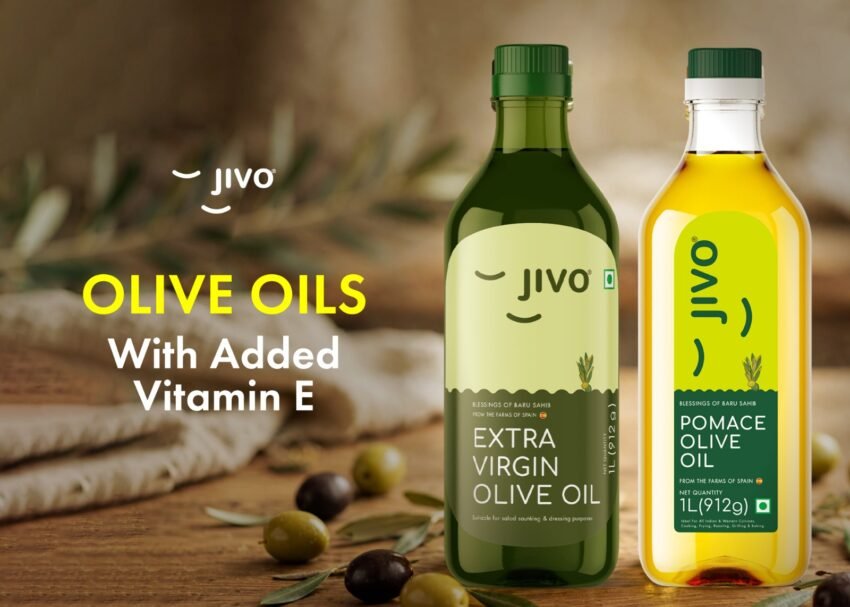
When buying cooking oil, checking the ingredient list can help you identify whether additional Vitamin E or tocopherols have been included. If you are looking for olive oils fortified with Vitamin E, Jivo Extra Virgin Olive Oil and Jivo Pomace Olive Oil are fortified with added Vitamin E to help maintain oil quality during storage.
ALSO READ: 3 Best Cold-Pressed Oils in India Fortified with Vitamin A & D
You may also try cooking oils free of cholesterol and trans fats, available to order online from Zepto and Blinkit for quicker delivery: Jivo EVOO and Extra Light Olive Oil.