
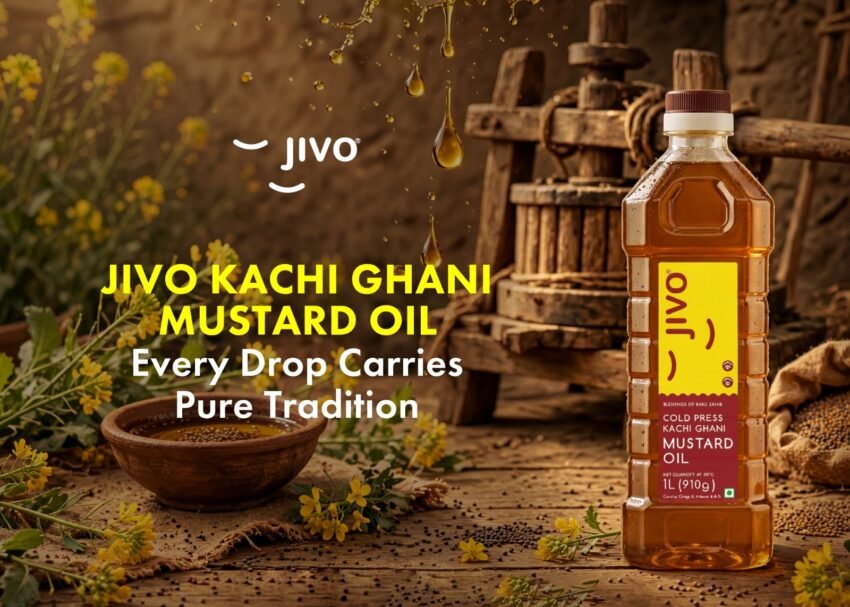
Mustard oil is the most popular cooking oil in India used by a majority of households. A nationwide health survey published on PMC found that mustard oil was the predominant cooking oil in 51 percent of Indian households, ahead of every refined oil combined. Among all the grades sold under that name, the best kachi ghani mustard oil, meaning the traditional cold-pressed version, is the one nutritionists and long-time users actually recommend, and this article explains why.
What Is Kachi Ghani Mustard Oil
Kachi ghani is a traditional way of making mustard oil. The name itself means “raw press,” where mustard seeds are slowly crushed in a wooden or stone press without applying high heat or using chemical solvents. After extraction, the oil is simply filtered and bottled, with very little processing in between. That traditional process is what sets the best kachi ghani mustard oil apart from products that use the term only as a marketing claim.
Because the oil is processed so gently, it keeps the bold aroma, rich amber colour, and many of the natural compounds that are present in mustard seeds. That’s also why many buyers don’t just pick the first bottle they see. Instead, they specifically look for the best cold-pressed mustard oil, knowing that the extraction method makes a real difference.
ALSO READ: Different Types of Kachi Ghani Oils and Which One Is Best for Daily Cooking
Kachi Ghani Versus Refined Mustard Oil
Refined mustard oil is made differently; its highly processed. It typically goes through high heat extraction, solvent washing, then bleaching and deodorising to impart a neutral smell and extended shelf life. These processes increase the oil yield from the same seed, which is why refined oil is usually cheaper. But this type of processed mustard oil lacks the nutritional properties what people actually search for in the best mustard oil in India.
The high heat and chemical steps also destroy many of the delicate compounds naturally present in mustard seeds, including some of the vitamin E and antioxidant content. If you are comparing bottles and want the best cold-pressed mustard oil, checking the label for the words kachi ghani or cold-pressed, rather than settling for plain refined, tells you almost everything you need to know before buying.
ALSO READ: Kachi Ghani vs Cold-Pressed vs Refined Oil
Nutrition That Makes Kachi Ghani Oil Worth Choosing
Mustard seeds naturally contain a strong mix of monounsaturated and polyunsaturated fats, along with vitamin E and natural antioxidants. Because kachi ghani oil skips the high heat step entirely, most of these nutrients survive the journey from seed to bottle, which is a large part of what makes the best kachi ghani mustard oil nutritionally different from an ordinary refined bottle sitting next to it.
It also carries a meaningful dose of omega 3 fatty acids, something most everyday cooking oils used in Indian kitchens do not offer in the same amount. This fat profile is really the reason people specifically look for the best mustard oil for cooking rather than grabbing whichever bottle is cheapest that week.
Top Health Benefits of Kachi Ghani Mustard Oil
The monounsaturated fats in mustard oil support a healthier balance between good and bad cholesterol, which is one reason it is often compared favourably against oils that are high in saturated fat. The vitamin E and antioxidants present in the unrefined version also help the body manage everyday oxidative stress, the kind linked to faster ageing and a weaker immune response over time, and this is a major reason the best cold-pressed mustard oil keeps coming up in discussions about heart friendly cooking.
There is also the sharp smell of mustard oil itself, which comes from a compound called allyl isothiocyanate. This compound is believed to carry mild antibacterial properties, which is part of why mustard oil has been used for generations not only in cooking but also for massage and home remedies, and why many families still consider it the best mustard oil in india for these everyday, non-cooking uses too.
7 Health Benefits of Mustard Oil Backed by Science You Need Know
Mustard Oil Benefits For Skin And Hair
Mustard oil has a long history of use outside the kitchen as well, and some of that use case does have real backing.
For skin, mustard oil is often used as a natural moisturiser because of its vitamin E content, which helps fight free radical damage and supports skin that looks fresher for longer. According to Healthline, lab based studies have found genuine antimicrobial properties in mustard oil, including activity against bacteria like E. coli and Staphylococcus aureus, which is part of why it has traditionally been used on minor skin irritations. The same source is upfront that most claims about smoother skin and fewer wrinkles from direct application are based on traditional and anecdotal use rather than large scale clinical trials, so it is worth trying with realistic expectations.
For hair, mustard oil remains one of the most common scalp massage oils in Indian households, and this is where it earns its reputation as the best mustard oil for hair. Massaging warm oil into the scalp is believed to improve blood circulation, which in turn is thought to support a healthier scalp and reduce dryness over time. Its natural fatty acid and vitamin E content may also help add shine to dull hair, though here too, most of the evidence comes from decades of traditional use rather than controlled studies, so results will vary from person to person.
If you want to try either use, warm the oil slightly before a scalp massage, and always do a small patch test on your skin first, since the natural strength of unrefined oil can irritate more sensitive skin.
The Truth About Erucic Acid In Mustard Oil
No article on mustard oil is complete without this part, so here it is directly.
Mustard oil naturally contains erucic acid, typically between twenty and forty percent depending on the seed variety. Decades ago, animal studies found that very high doses of erucic acid caused fat buildup in the heart muscle of rats. Based on those findings, the United States restricted mustard oil as a cooking oil, while the European Union, Australia, and New Zealand chose instead to set upper intake limits rather than a full ban. Any brand selling the best kachi ghani mustard oil should be upfront about this rather than leaving it out of the conversation entirely.
Here is the part that gets missed most often. Cold-pressing does not remove or reduce erucic acid in any way, since it is a fixed part of the seed’s natural fat composition, and no amount of gentle pressing changes that chemistry. What cold-pressing does change is the presence of harsh processing residues and how many natural nutrients make it into the final bottle, which is a real advantage, just a separate one from the erucic acid question.
To date, there is no confirmed human study proving that erucic acid at normal cooking levels causes heart problems the way it did in those older rat experiments. Even so, it remains a genuinely unsettled scientific debate, and the sensible approach is moderation, using mustard oil as part of a varied diet rather than the only oil in the house. This is also why picking the best cold-pressed mustard oil from a source you trust matters more than chasing the cheapest bottle available.
Is Mustard Oil Safe For Daily Cooking
For most Indian households already using mustard oil regularly, the answer is yes, in reasonable quantity. Indian cooking generally uses oil in moderate amounts for tempering, sauteing, and occasional frying, not as the single dominant fat source the way some other diets rely on one oil almost exclusively. Rotating between mustard oil, groundnut oil, and a lighter oil such as sunflower or rice bran oil is a habit many nutritionists quietly recommend, rather than depending on just one bottle for everything, even if that bottle happens to be the best kachi ghani mustard oil you have found so far.
If you already manage cholesterol or a heart condition, it is worth a quick conversation with your doctor about how much mustard oil fits your specific diet, rather than assuming one size fits all. For most everyday households though, using the best mustard oil for cooking in sensible amounts fits comfortably into a normal Indian diet, and choosing the best cold-pressed mustard oil for that daily use only adds to the benefit.
How To Choose The Best Mustard Oil In India
Not every bottle labelled kachi ghani on a shelf is actually made the traditional way, so a bit of label reading matters if your goal is genuinely finding the best mustard oil in India rather than the loudest packaging.
Look for oil that clearly states cold-pressed or kachi ghani on the label, along with a batch number and manufacturing date. The colour should be a deep amber or golden brown, never watery or too light. A genuine bottle will also have a strong, sharp smell the moment it is opened, since that pungency is a sign the natural compounds have not been stripped out during processing. If the oil smells flat or mild, there is a good chance it has been heavily refined regardless of what the label says. This same smell test applies if you are buying oil specifically for hair care, since the best mustard oil for hair should smell just as strong as the oil in your kitchen.
Price is a fair indicator too. Genuine cold-pressed oil needs more seed and more time to produce, so it usually costs a little more than a mass produced refined bottle. If you are hunting for the best mustard oil in India for your kitchen, resist the urge to always pick the cheapest option, since that low price often comes straight out of the oil’s purity. The Jivo Wellness blog covers this buying process in more depth, with practical label reading tips for spotting genuine cold-pressed oils on Indian shelves.
Jivo Cold Pressed Kachi Ghani Mustard Oil, A Trustworthy Pick
One name that has built a solid reputation among Indian households is Jivo Cold Pressed Kachi Ghani Mustard Oil. What sets it apart is that it is completely argemone free, which matters a great deal since argemone contamination in mustard oil has historically been linked to serious health issues in India, including the dropsy outbreaks reported in the past. Buying from a brand that guarantees purity on this front is not a minor detail, it is genuinely important for household safety, and it is a big reason people rank it among the best mustard oil in India for everyday use.
Jivo also fortifies its oil with vitamin A and vitamin D, two nutrients a large number of Indians are commonly found lacking in daily diet, especially those with limited sun exposure or a diet low in dairy and eggs. Getting a small extra dose of these vitamins through an oil already used daily is a practical way to fulfil that gap without changing the household routine, and it is one more reason this bottle stands out among options for the best cold-pressed mustard oil on Indian shelves. Combined with the traditional cold pressing method, this makes Jivo a genuine contender for the best kachi ghani mustard oil title in a fairly crowded market.
FAQS: Kachi Ghani Mustard Oil
Is kachi ghani mustard oil better than refined mustard oil?
Yes, for nutrition and flavour. Kachi ghani oil is extracted without heat or chemicals, so it retains more vitamin E, antioxidants, and natural pungency than refined oil, which is exactly why the best kachi ghani mustard oil is worth the slightly higher price over a plain refined bottle.
Is mustard oil good for daily cooking in India?
Used in moderate, everyday quantities as part of a varied diet, mustard oil fits comfortably into a normal Indian cooking routine, which is why it remains the best mustard oil in India for most households despite the wider range of oils now available. Doctors generally recommend rotating it with other oils rather than relying on it exclusively.
Does cold pressing remove erucic acid from mustard oil?
No. Erucic acid is a natural part of the seed’s fat composition, and no extraction method, cold-pressed or otherwise, changes that. Cold-pressing affects nutrient retention and processing residues, not erucic acid content.
Can kachi ghani mustard oil be used for hair and skin?
Yes, it is commonly used for scalp massage and as a skin moisturiser due to its vitamin E and fatty acid content. Most of this evidence comes from long-standing traditional use rather than large clinical trials.
How do I identify genuine cold-pressed mustard oil?
Check the label for the words cold-pressed or kachi ghani, along with a batch number and manufacturing date. Genuine oil has a deep amber colour and a strong, sharp smell the moment the bottle is opened, and these same checks apply whether you are shopping for the best cold-pressed mustard oil in a supermarket or online.
Conclusion
Kachi ghani mustard oil has been a part of Indian cooking for generations, and there are good reasons why it is still preferred in many homes. Its distinctive flavour, naturally occurring antioxidants, and favourable fat profile make it a practical choice for everyday cooking. Beyond the kitchen, it has also been used for skin and hair care for decades. That is why the best kachi ghani mustard oil continues to be a trusted staple across Indian households.
Like any cooking oil, quality matters. Choosing a well-made product from a reliable brand and using it as part of a balanced diet is far more important than chasing marketing claims. If you’re buying mustard oil, it makes sense to look for the best cold-pressed mustard oil, as the traditional extraction method helps retain its natural characteristics.
If you are wondering which one to choose, Jivo Cold Pressed Kachi Ghani Mustard Oil is a dependable option. It is argemone-free, fortified with vitamins A and D, and well suited to the demands of everyday Indian cooking.