
Non Alcoholic Fatty Liver Disease, commonly known as NAFLD, has become one of the most common liver conditions across the world. In India too, doctors are seeing more people with fatty liver, even among those who do not drink alcohol. A busy lifestyle, lack of physical activity, frequent consumption of processed foods, sugary drinks, and excess calorie intake are some of the major reasons behind this growing concern.
The good news is that lifestyle changes can make a real difference. Along with regular exercise and maintaining a healthy weight, paying attention to everyday food choices, including the cooking oil used at home, may also play an important role in supporting overall liver health.
Canola oil has often been discussed because of its balanced fatty acid profile and its relatively low saturated fat content. But can it really make a difference for people with fatty liver? Is it the best oil for liver health, or is the evidence still developing?
A recent scientific study explored this question by examining how canola oil affected fatty liver and other metabolic changes in an experimental model. While the findings are encouraging, it is important to understand exactly what the researchers did and what the results actually mean.
In this article, we will explore the research in simple language so that you can understand both its strengths and its limitations.
Understanding Non Alcoholic Fatty Liver Disease
NAFLD is a condition where excess fat builds up inside the liver in people who consume little or no alcohol. A small amount of fat in the liver is normal, but when too much fat accumulates, it can interfere with normal liver function.
Many people with NAFLD do not experience any symptoms during the early stages. Often, the condition is discovered during routine health check-ups or ultrasound scans.
If left unmanaged, fatty liver may progress to liver inflammation, liver scarring, or even more serious liver diseases in some individuals. Fortunately, many cases can improve through healthy lifestyle changes.
People with NAFLD often have one or more of the following conditions.
- Excess body weight
- High cholesterol
- High triglycerides
- High blood sugar
- Insulin resistance
- Metabolic syndrome
Because these conditions are closely connected, experts usually recommend looking at overall dietary habits instead of focusing on just one nutrient or one food.
Best Cooking Oils in India to Help Prevent Fatty Liver Disease
Why Does Cooking Oil Matter?
Cooking oil is an important part of the daily Indian diet. Whether it is used for preparing vegetables, dals, curries, or snacks, the type of oil used contributes to the overall fat intake.
Different cooking oils contain different amounts of saturated fats, monounsaturated fats, and polyunsaturated fats. These fats can influence cholesterol levels, inflammation, and other aspects of metabolic health.
Canola oil is often considered a healthy oil because it contains comparatively low levels of saturated fat while providing a good balance of monounsaturated and polyunsaturated fats. It also contains alpha linolenic acid, a plant-based omega 3 fatty acid.
Researchers wanted to know whether these characteristics could help reduce some of the harmful effects caused by diets high in fat and sugar.
What Was the Purpose of the Study?
The research aimed to investigate whether replacing part of the dietary fat with canola oil could improve changes associated with metabolic syndrome and fatty liver.
Metabolic syndrome refers to a group of health conditions that tend to occur together. These include increased abdominal fat, abnormal blood sugar, unhealthy cholesterol levels, elevated triglycerides, and high blood pressure. Together, these factors increase the risk of heart disease, type 2 diabetes, and fatty liver disease.
The researchers believed that the quality of dietary fat might influence how the body stores fat and responds to inflammation and oxidative stress.
Best Cooking Oils for Heart Health in India– What Heart Patients Need to Know
How Was the Research Conducted?
This research was not carried out in humans. Instead, scientists used laboratory mice to create an experimental model that closely mimics many features of human metabolic syndrome and NAFLD.
Using animals allows researchers to carefully control diet, environment, and other factors that are difficult to standardise in human studies. It also helps scientists understand how specific nutrients may affect organs such as the liver before conducting larger human clinical trials.
The researchers used male C57BL 6 mice, which are commonly used in metabolic research because they readily develop obesity and fatty liver when fed diets rich in fat and sugar.
The mice were divided into different dietary groups.
One group received a standard laboratory diet and served as the healthy control group.
Another group was fed a Western style diet containing high amounts of fat and fructose. This diet was designed to promote obesity, insulin resistance, and fat accumulation in the liver, similar to what is often seen in people with unhealthy dietary habits.
Additional groups received modified versions of the Western style diet in which the fat source was changed. These included diets enriched with canola oil, soybean oil, or olive oil.
By comparing these groups, the researchers could observe whether the different oils influenced liver health differently while the rest of the diet remained largely similar.
What Did the Researchers Measure?
The scientists did not rely on just one measurement. Instead, they performed a wide range of tests to understand how each dietary oil affected the body.
Throughout the study, they monitored body weight and food intake.
At the end of the experiment, they collected blood samples to measure several markers related to metabolic health.
The liver was examined carefully to determine the amount of fat that had accumulated. Tissue samples were also analysed under a microscope to identify structural changes that cannot be detected through blood tests alone.
In addition, the researchers measured markers of oxidative stress. Oxidative stress occurs when harmful molecules known as free radicals outnumber the body’s natural defence systems. Long term oxidative stress has been linked with liver damage and progression of fatty liver disease.
The team also analysed the fatty acid composition of liver tissue. This helped them understand how different dietary oils influenced the types of fats stored inside the liver.
By combining all these observations, the researchers were able to build a detailed picture of how canola oil affected liver health in this experimental model instead of relying on a single laboratory value.
Why Is This Study Important?
Many earlier studies have examined individual nutrients or supplements. However, this research focused on something that millions of families use every day, cooking oil.
Since changing the cooking oil is a practical dietary modification, understanding whether different oils influence liver health could have meaningful public health implications.
At the same time, it is important to remember that this was an animal study. Animal research is valuable because it helps scientists identify promising dietary approaches, but its findings cannot automatically be applied to humans.
Human bodies are much more complex, and factors such as genetics, lifestyle, physical activity, and overall eating patterns all influence liver health. For this reason, the findings should be viewed as encouraging scientific evidence rather than proof that canola oil can treat NAFLD in people.
What Did the Study Find?
After 16 weeks, the differences between the groups became much clearer. The researchers evaluated body weight, fat accumulation, liver tissue, oxidative stress, and fatty acid composition to understand how each oil influenced liver health.
The findings showed that the Western style diet alone had a significant negative impact on the animals. However, replacing the fat source with vegetable oils, particularly canola oil, helped improve several important markers.
Can Canola Oil Protect Your Heart Better Than Other Oils? A Head-to-Head Comparison
Reduction in Liver Fat Was Most Noticeable with Canola Oil
The main focus of the study was to examine how different vegetable oils influenced fat accumulation in the liver.
As expected, mice fed the Western style diet high in fat and fructose developed significantly greater hepatic fat accumulation than the healthy control group. The researchers measured total liver fat and also examined liver tissue under a microscope to confirm these changes.
Among the vegetable oil groups, the mice receiving canola oil showed a significant reduction in total hepatic fat accumulation compared with the untreated Western diet group. The researchers reported this reduction to be statistically significant (p < 0.01).
The microscopic examination supported these findings. While the untreated Western diet group showed moderate to severe diffuse microvesicular steatosis, the canola oil group showed only mild steatosis. Similar improvements were also observed in the soybean oil group, while the olive oil group showed mild to moderate macrovesicular and microvesicular steatosis. Importantly, none of the groups showed evidence of liver fibrosis or inflammation during the study period.
Changes in Fatty Acids Inside the Liver
The researchers also analysed the types of fatty acids stored in the liver after the dietary intervention. This helped them understand whether different cooking oils could influence the liver’s own fat composition.
The results showed that the fatty acid profile of the liver varied depending on the oil consumed. Mice fed diets containing canola oil had higher levels of omega 3 fatty acids in the liver than those fed the untreated Western style diet. Similar changes were also observed in the soybean oil group, reflecting the fatty acid composition of these oils.
These findings suggest that the type of fat consumed in the diet can influence the types of fatty acids that accumulate in the liver. This may be one of the reasons why the quality of dietary fat is considered important when studying metabolic health and fatty liver disease.
Also Read: How Many Fatty Acids Are Found in Healthy Cooking Oils in India?
Oxidative Stress Was Also Evaluated
The researchers also examined oxidative stress, which is known to play a role in the development and progression of fatty liver disease. Oxidative stress occurs when the production of harmful free radicals exceeds the body’s natural antioxidant defences, potentially leading to damage in liver cells.
To better understand these effects, the researchers measured several oxidative stress markers in liver tissue. They observed differences in these markers between the dietary groups, suggesting that replacing the fat source in a Western style diet influenced oxidative stress in the liver.
The authors suggested that the fatty acid composition of vegetable oils, together with naturally occurring antioxidant compounds such as vitamin E, may have contributed to these findings. However, the study was not designed to determine the exact biological mechanisms responsible for these changes.
Why Might Canola Oil Have Performed Well?
The researchers discussed several possible reasons.
- Canola oil contains relatively low amounts of saturated fat.
- It is naturally rich in monounsaturated fats.
- It also provides alpha linolenic acid, which is a plant based omega 3 fatty acid.
- In addition, canola oil contains natural vitamin E compounds that have antioxidant properties.
Rather than acting through one single mechanism, these characteristics may work together to influence fat metabolism, oxidative balance, and lipid storage in the liver.
However, the study did not directly prove which individual component was responsible for the improvements.
The results only show that the overall composition of canola oil was associated with beneficial outcomes in this animal model.
What Do These Findings Mean for People?
This is where careful interpretation becomes important.
It would be incorrect to say that canola oil treats or cures fatty liver.
The study was conducted in laboratory mice, not in people.
Animal studies are an important first step because they allow researchers to understand biological processes under carefully controlled conditions. Many medical discoveries begin with animal research before moving to human clinical trials.
Therefore, these findings should be viewed as promising evidence rather than final proof.
The authors themselves used cautious language in their conclusion. They suggested that canola oil may be useful in managing metabolic syndrome related conditions and fatty liver, while also emphasising the need for further research.
For people with NAFLD, no single cooking oil can replace the importance of an overall healthy lifestyle.
Regular physical activity, maintaining a healthy body weight, limiting sugary drinks, reducing highly processed foods, and following a balanced diet continue to be the foundation of fatty liver management.
Choosing a healthy oil with a favourable fatty acid profile can be one part of those broader dietary improvements. When combined with healthy eating habits, it may contribute to better metabolic health over time.
What Are the Strengths and Limitations of This Study?
Like any scientific research, this study has both strengths and limitations. Understanding these helps put the findings into the right perspective.
One of the biggest strengths of the study is its comprehensive approach. Instead of looking at just one marker, the researchers evaluated body weight, liver fat accumulation, liver tissue under the microscope, fatty acid composition, and oxidative stress. This provided a broader understanding of how different dietary oils affected metabolic health.
Another strength is that the researchers compared canola oil with other commonly used vegetable oils, including soybean oil and olive oil, under the same experimental conditions. This allowed them to observe how each oil performed when included in a Western style diet.
The study also followed the animals for 16 weeks, which is a sufficient duration to develop features of metabolic syndrome and fatty liver in this experimental model.
However, the study also has important limitations.
The biggest limitation is that it was conducted in laboratory mice rather than humans. Although animal studies are valuable for understanding biological mechanisms, the results cannot be directly applied to people. Human metabolism is influenced by several additional factors, including genetics, age, physical activity, existing health conditions, and overall dietary habits.
Another limitation is that the study focused on a controlled laboratory setting. Real life eating patterns are much more varied, and people consume a combination of foods rather than a single dietary intervention.
Therefore, while the findings are encouraging, they should be viewed as preliminary evidence that supports further human research rather than proof that canola oil can prevent or treat NAFLD.
Recent Human Clinical Evidence on Canola Oil and NAFLD
While the study discussed earlier was conducted in animals, researchers have also investigated canola oil in people with Non Alcoholic Fatty Liver Disease.
A systematic review and meta analysis published in 2025 combined the findings from three randomised controlled trials, comprising four intervention arms and involving a total of 220 adults with NAFLD. By analysing multiple clinical studies together, the researchers aimed to better understand whether canola oil consistently influences liver and metabolic health.
The analysis found that participants consuming canola oil as part of the intervention experienced significant reductions in two commonly measured liver enzymes, alanine aminotransferase (ALT) and aspartate aminotransferase (AST). Triglyceride levels also improved. However, no significant improvements were observed in high density lipoprotein (HDL) cholesterol or gamma glutamyl transferase (GGT).
The authors also pointed out that the available evidence is still limited because only a small number of clinical trials met the inclusion criteria. Differences in study design, intervention methods, and relatively small sample sizes mean that larger and longer duration human studies are still needed before firm conclusions can be drawn.
Overall, the current human evidence is encouraging, but it does not establish canola oil as a treatment for NAFLD. Instead, it suggests that canola oil may be a useful part of a balanced dietary pattern that supports overall liver and metabolic health.
Is Canola Oil the Best Oil for Liver Health?
Many people search online for the best oil for liver health, but there is no single cooking oil that is considered the perfect choice for everyone.
Experts generally agree that the overall quality of the diet matters far more than relying on one particular ingredient.
Canola oil offers several nutritional characteristics that make it a suitable option for everyday cooking. It is naturally low in saturated fat and provides a balance of monounsaturated and polyunsaturated fats, including alpha linolenic acid, which is a plant-based omega 3 fatty acid.
The animal study discussed in this article suggests that these characteristics may contribute to lower liver fat accumulation and improved metabolic markers. Early human studies also indicate potential benefits, but the evidence is not yet strong enough to conclude that canola oil is the single best choice for managing NAFLD.
Instead of looking for one miracle oil, it is more practical to choose a healthy oil that fits within an overall balanced diet. Along with healthy cooking practices, regular exercise, maintaining a healthy body weight, eating more fruits, vegetables, whole grains, pulses, and limiting added sugars and highly processed foods remain the most effective strategies for supporting liver health.
Conclusion
Scientific research continues to improve our understanding of how dietary fats may influence liver health. The animal study discussed in this article found that replacing the fat source in a Western style diet with canola oil was associated with reduced liver fat accumulation and favourable changes in several markers related to metabolic health. While these findings are encouraging, they represent evidence from an animal model and should be interpreted with appropriate caution.
Human research is also beginning to show promising results, with early clinical studies reporting improvements in certain liver enzymes and triglyceride levels. However, the available evidence is still limited, and larger, well designed clinical trials are needed before firm conclusions can be drawn about the role of canola oil in managing Non Alcoholic Fatty Liver Disease.
If you are looking for the best oil for liver health, remember that no single cooking oil can replace the benefits of a healthy lifestyle. A balanced diet, regular physical activity, maintaining a healthy body weight, and choosing a healthy oil with a favourable fatty acid profile are all important steps towards supporting long term liver health.
For everyday cooking, cold pressed canola oil can be a suitable choice as part of a balanced diet, offering a favourable fatty acid profile while preserving its naturally occurring flavour and beneficial compounds through a gentle extraction process.
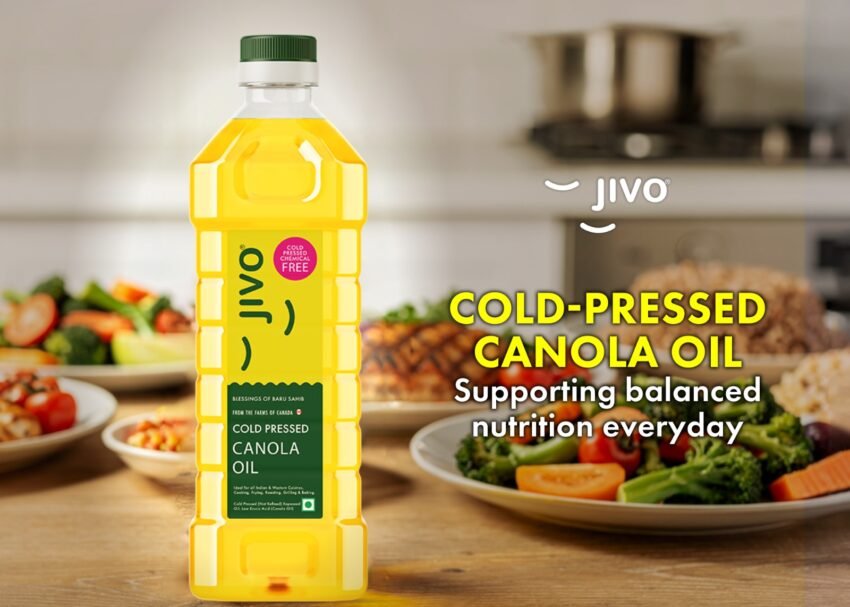
You may try Jivo Cold-Pressed Canola Oil as this reputed oil brand is the largest seller of cold-pressed canola oil in India, offering a wide range of cold-pressed oils.