
Which oil is best for cooking and health? The answer isn’t easy. In India, families don’t switch their cooking oil overnight based on word of mouth alone. Edible oils are passed down from generation to generation, like kachi ghani mustard oil. Mustard oil is one of the most popular and consumed edible oils in India. For many Indian homes, mustard oil is one of the best cooking oils in India. But there’s another group, though not as large as mustard oil users, who prefer sunflower oil. Now, the question is: which of the two is the better option?
Coming to a quick conclusion is not wise. Credible research papers, FSSAI guidelines, and label identification methods help make an informed decision. To ease your hassles, this blog is like a guide, offering honest answers. The ultimate objective is to help readers pick the best cooking oils in India rather than just going with whatever advertisement they saw last.
What Does Cold Pressed Actually Mean
Before comparing mustard and sunflower oil, it is important to know what cold pressing does differently. Most cooking oils sold in supermarkets are mostly refined – highly processed. That means the oil goes through heating, bleaching and a chemical solvent process to make it clear, odourless and long lasting. Refining process is opted to scale production to meet the demand, but it also depletes several natural compounds that were present in the seed to begin with.
Cold pressed oil skips almost all of this. Seeds are crushed slowly, usually below 50 degrees Celsius, without any solvents involved. The oil that comes out still carries its original colour, smell and taste. This is exactly why cold pressed mustard oil smells sharp and pungent, while a refined bottle smells different.
Understanding this difference matters if you are serious about finding the best cooking oils in India for your family. The same logic applies when you are trying to spot the best sunflower oil in a shop full of similar looking bottles. Genuine cold pressed oil will mention the extraction method clearly on the label, often written as kachi ghani for mustard.
Mustard Oil and What the Studies Actually Show
Mustard oil has been part of Indian food for a very long time, especially across the north, east and parts of central India. People use it for tempering, deep frying, pickling and even for oil massages. Ask ten people what the best mustard oil is and you will probably get ten different brand names, but the real answer comes down to how the oil is extracted rather than which brand shouts the loudest.
From a nutrition angle, mustard oil naturally carries a good ratio of monounsaturated fats along with omega 3 fatty acids. This combination is generally considered good for the heart when the oil is used as part of a balanced diet.
There is actual clinical evidence backing this up too. One randomized clinical trial suggested that mustard oil may be associated with favourable cardiac outcomes in patients with suspected acute myocardial infarction. However, the study authors concluded that larger clinical trials are needed to confirm these findings. You can read that trial here. This is one of the few human trials done on mustard oil specifically, and while it dates back to 1997, it remains one of the more credible pieces of evidence available on this topic.
Mustard oil also contains a compound called allyl isothiocyanate, which is responsible for that sharp smell everyone recognises instantly. Research has linked this compound to antimicrobial properties, and a review on glucosinolates found in mustard seeds points to possible anti inflammatory benefits as well.
For daily cooking, the sensible recommendation for the best mustard oil is a cold pressed or kachi ghani variant rather than a heavily refined one, simply because refining removes a good chunk of these natural compounds during processing.
Monounsaturated and Polyunsaturated Fat Levels Compared
Mustard oil typically carries around 66 to 74 percent monounsaturated fat, 20 to 28 percent polyunsaturated fat and only about 5 to 7 percent saturated fat approximately, according to a review published in a peer reviewed nutrition journal. That heavy monounsaturated share is the main reason mustard oil keeps getting compared favourably to olive oil.
Regular sunflower oil looks almost the opposite. Comparative research on edible oil chemistry shows linoleic acid, which is polyunsaturated, making up around 70 percent of sunflower oil, while its monounsaturated content stays much lower unless the bottle is specifically labelled high oleic. High oleic sunflower oil flips this ratio, with monounsaturated fat climbing above 80 percent in some samples, which is exactly why that particular variant earns the qualified heart health claim mentioned earlier and regular sunflower oil does not.
So when the two oils are placed side by side on fat composition alone, mustard oil naturally leans monounsaturated and heart friendly, while standard sunflower oil leans heavily polyunsaturated, which is fine in moderation but not something to build an entire diet around.
What is MUFA (Monounsaturated Fat)? Know About the Best MUFA-Rich Healthy Oils in India
Sunflower Oil and Where the Research Gets Tricky
Sunflower oil is the oil most Indian households picked up somewhere in the last two or three decades, mainly because it is light, neutral in taste and does not interfere with the flavour of a dish. It became a common answer to the best cooking oils in India question long before mustard oil made its comeback in urban kitchens.
Here is where things get interesting though. Sunflower oil is not one single product. There are different varieties depending on how much oleic acid they contain, and most of the positive heart health research is tied specifically to high oleic sunflower oil, not the regular variety that fills most shelves across India.
Regular sunflower oil is high in linoleic acid, which is an omega 6 fat. In small quantities this fat is genuinely useful and even essential for the body. A high linoleic acid diet increases oxidative stress in vivo and affects nitric oxide metabolism in humans (1998). The study found that a diet high in linoleic acid increased biomarkers of oxidative stress and altered nitric oxide metabolism in healthy volunteers.
This is not meant to scare anyone away from sunflower oil. It simply means the best sunflower oil for you is one that is either high oleic or one that you are not relying on as your only cooking oil at home.
So Which Oil Actually Wins
Sitting on the fence does not help anyone trying to make a real decision. Between the two, for everyday health reasons, mustard oil has a slightly stronger case. It has an actual human clinical trial behind it, a naturally better fat profile, and centuries of traditional use across Indian households that has clearly not caused harm at normal consumption levels.
Sunflower oil is not a bad choice by any means. It works beautifully for light sautéing, baking and dishes where a strong smell would ruin the taste. The best sunflower oil for such purposes is one that is cold pressed rather than heavily refined, since refining strips away much of its natural vitamin E content.
The smartest approach, and the one most Indian kitchens already follow without even realising it, is to use both. Mustard oil for tempering, pickles and fish curries. Sunflower oil for everyday sautéing where you want the ingredients to shine through rather than the oil.
Why Cold Pressed Deserves the Extra Money
People often ask if paying more for cold pressed oil is actually worth it. Based on the research and the way these oils are processed, the answer leans toward yes, and here is the reasoning behind that.
Cold pressed oils do not go through chemical solvents during extraction, so there is nothing left behind to worry about. They also skip the aggressive high heat refining process, which means there is far less risk of trans fat formation, something that can happen during industrial processing. The natural antioxidants, vitamin E and other micronutrients present in the seed largely survive the cold pressing process instead of getting destroyed by heat.
This is particularly true if you are comparing bottles trying to identify the best mustard oil on a crowded supermarket shelf, and finding the best sunflower oil often comes down to checking the oleic acid content on the label rather than trusting marketing claims printed in bold letters.
If you are trying to identify the best cold-pressed oils in India, do not just trust the word cold pressed printed in bold on the front of the bottle. Flip it over and check the extraction method mentioned in smaller text, along with the smoke point and any FSSAI certification number.
How to Avoid Buying Fake Cold Pressed Oil
Adulteration is a real problem in the Indian edible oil market, and mustard oil especially has faced scrutiny over the years. A few simple checks can save you from buying a fake or heavily diluted product.
Buy from a brand with a proper FSSAI license number printed on the bottle. Check that the label actually mentions kachi ghani or wood pressed extraction rather than just the word natural. Be a little suspicious of unusually cheap pricing, since genuine cold pressed oil naturally costs more because of lower extraction yield. And always store the oil in a cool, dark place once opened, since cold pressed oils oxidise faster than refined ones do.
Is Your Mustard Oil Pure? 7 Simple Tests to Spot Fake Mustard Oil
A Straightforward Take for Anyone Confused Between the Two
For anyone standing in a store aisle staring at both bottles, unsure which one to pick, the advice is simple. Do not treat this like a one time decision. The best cooking oils in India for most households are not a single bottle but a small rotation of two or three oils used for different purposes through the week.
Keep a bottle of the best mustard oil you can find for your tadka, pickles and heavier dishes. Keep a bottle of the best sunflower oil for your lighter, everyday cooking. That rotation approach is honestly the smartest way to make use of the best cold-pressed oils in India without overspending on either one. And whichever you pick, choose the cold pressed version over the heavily refined one whenever your budget allows it.
FAQs
Which oil is better for making pickles: cold-pressed mustard oil or sunflower oil?
Cold-pressed mustard oil is traditionally preferred for pickles because of its strong flavour and natural preservative qualities. Sunflower oil is rarely used for this purpose.
Does cold-pressed mustard oil have a stronger taste than sunflower oil?
Yes. Cold-pressed mustard oil has a pungent, earthy flavour, while cold-pressed sunflower oil has a mild, neutral taste that doesn’t overpower food.
Which oil is better for high-heat Indian cooking?
Cold-pressed mustard oil is generally better for deep frying, stir-frying, and traditional Indian cooking due to its high smoke point.
Can I switch from refined oil to cold-pressed oil directly?
Yes. You can replace refined oil with cold-pressed oil in your daily cooking without making any special changes to your recipes.
Which cold-pressed oil is better for people who don’t like a strong smell?
Cold-pressed sunflower oil is a better option because it has a light aroma and mild flavour compared to mustard oil.
Conclusion
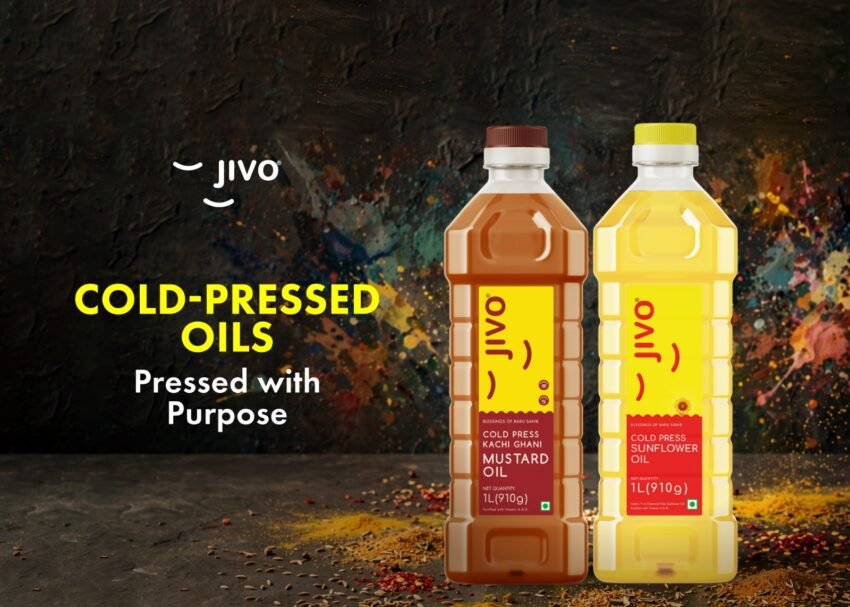
If you want a shortcut instead of comparing ten different brands on a store shelf, Jivo offers cold pressed mustard oil and cold pressed sunflower oil that are both fortified with vitamin A and vitamin D. Considering how common vitamin D deficiency is across India, this small addition makes an already good oil a bit more worthwhile to try. Jivo’s version is one of the more consistent options if you are looking for the best mustard oil already fortified with added vitamins, without having to look out for a separate supplement. This makes it a solid pick among the best cold-pressed oils in India if you want the fortification benefit built right into your daily cooking oil.
You may also try cooking oils free of cholesterol and trans fats, available to order online from Zepto and Blinkit for quicker delivery: Jivo EVOO and Extra Light Olive Oil.
Disclaimer
This article is written for general information and awareness only. It is not medical advice and should not be treated as a replacement for guidance from a qualified doctor or registered dietitian. The studies mentioned above reflect findings from specific research settings and do not guarantee the same results for every individual. Please consult a healthcare professional before making significant changes to your diet, especially if you have an existing health condition. This article does not intend to diagnose, treat, cure or prevent any disease.