
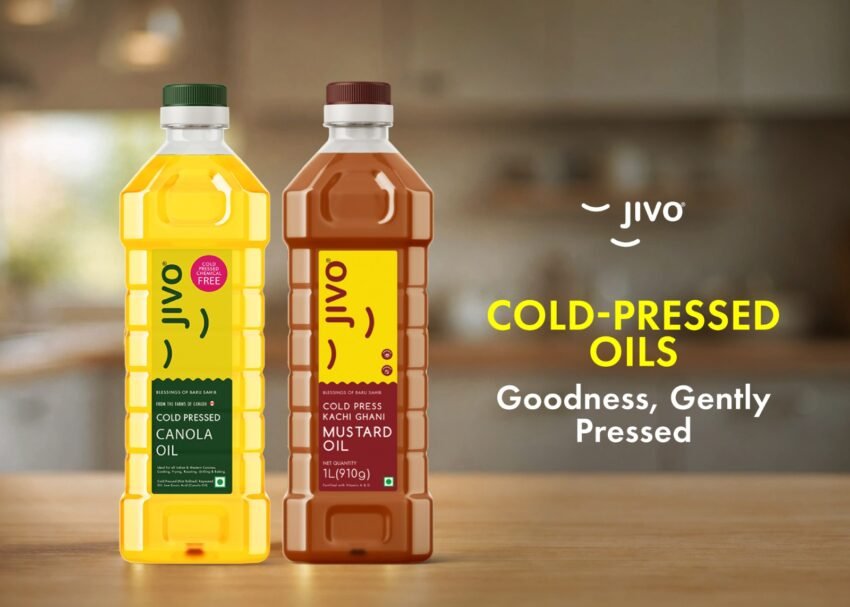
Most Indian kitchens have shifted to cold pressed oil in the last few years, and for good reason. It tastes closer to the actual seed or nut it comes from, it holds on to more nutrients, and it does not go through the heavy chemical processing that refined oils go through. But once that bottle is opened, a genuine question comes up to our mind. How long can we actually use it before it starts losing its goodness?
This is not a small detail. Using an oil beyond its expiry does not just affect taste. It can also mean you are consuming an oil that has already started breaking down through oxidation, which changes its nutritional value and, in some cases, its safety too. So, it is worth understanding properly the shelf life of an oil and time frame of using it.
Why Cold Pressed Oil Behaves Differently from Refined Oil
Refined oils go through bleaching, deodorising and heat treatment. This process removes most of the natural compounds in the oil, but it also removes many of the things that make oil spoil quickly. That is why refined oil sitting in your kitchen cabinet for a year does not seem to bother anyone.
Cold pressed oil is the opposite story. It is extracted using only mechanical pressure and low temperatures, without solvents or heavy processing. This keeps its natural antioxidants, vitamins and flavour compounds intact, which is exactly why people choose it in the first place. But these same natural compounds react faster with air, light and heat. So cold pressed oil is more alive in a sense, and that means it also ages faster once the seal is broken.
A study published in Frontiers in Nutrition on pressed oil shelf life explains that unrefined oils oxidise faster than refined ones because they retain more of the natural fatty acid structure that reacts with oxygen. This is not a flaw in the product. It is simply the nature of an oil that has not been stripped down chemically.
ALSO READ: How Do Cold-Pressed Oils Preserve Nutrients Better than Refined Oils in India
What Actually Makes Oil Go Bad
Oil spoilage mostly comes down to one word, oxidation. When oil comes in contact with oxygen, the fat molecules in it start breaking apart. This creates compounds that change the smell, taste and texture of the oil. Three things speed up this process the most.
Air exposure is the biggest one. Every time the bottle is opened, a little more oxygen gets in.
Light also plays a big role, especially direct sunlight, because UV rays break down the natural antioxidants in the oil much faster.
Heat is the third factor, so oil kept near a stove or in a warm kitchen corner will spoil sooner than one kept in a cool cabinet.
Moisture matters too. Even a few drops of water entering the bottle through a wet spoon can encourage the oil to spoil faster than expected.
ALSO READ: Reheating Oils Form Toxins – Switch to Cold-Pressed Oils to Protect Your Health
How Long Does Cold Pressed Oil Last After Opening
There is no single answer here because different oils behave differently once the bottle is opened. Groundnut oil generally holds up well and can be used for about four to six months after opening if it is stored properly. Mustard oil tends to be fairly stable too, often lasting around five to six months once opened, thanks to its naturally higher content of compounds that resist oxidation. Sesame oil sits in a similar range, usually good for about four to six months after opening, especially if kept in a dark bottle.
Coconut oil is mostly saturated fat, which does not oxidise as fast as other fats. It can comfortably last close to a year after opening if stored in a cool, dry spot. Sunflower and safflower oil, on the other hand, are higher in polyunsaturated fat, which is more reactive with oxygen, so these are best used within two to three months of opening for the best quality.
These numbers are general guidelines and not fixed rules. The actual life of your bottle depends heavily on how it has been stored, how often it is opened, and the weather conditions where you live. A bottle opened in Delhi in peak summer will not behave the same way as one opened in a cooler hill station.
ALSO READ: Which Are the Best Cold-Pressed Oils in India – Mustard, Canola, or Sunflower?
Signs That Tell You Oil Has Gone Bad
You do not need lab equipment to figure this out. Your nose and your eyes are usually enough.
The smell changes first, usually turning slightly sour, musty or like old crayons instead of the fresh, nutty or earthy aroma the oil originally had.
The taste turns bitter or flat, and sometimes leaves a slightly sharp aftertaste at the back of the throat.
The colour can darken or turn cloudy, though it is worth noting that some cloudiness in unfiltered cold pressed oil is completely normal and not a sign of spoilage on its own.
The texture may feel slightly sticky or thicker than usual near the cap, which usually means oxidation has already started.
If you notice more than one of these signs together, it is safer to discard the oil rather than continue using it, since the health benefits are gone by that point and consuming it regularly is not doing your body any favours.
Simple Storage Habits That Actually Extend Shelf Life
A few small changes in how oil is stored at home can add weeks, sometimes months, to its usable life.
Keep the bottle in a cool, dark cabinet rather than an open shelf near the window or stove.
Choose oil sold in dark glass or tinted bottles wherever possible, since these block light far better than clear plastic bottles.
Always close the cap tightly right after use instead of leaving it loosely fitted.
Avoid dipping wet spoons or ladles directly into the bottle, as moisture speeds up spoilage.
If you buy oil in bulk containers, transfer a small usable quantity into a smaller bottle for daily use and keep the main container sealed and stored away. Smaller bottles mean less empty air space inside, which slows down oxidation.
Some oils, especially those higher in polyunsaturated fats like flaxseed or walnut oil, genuinely benefit from refrigeration after opening, even though this is not commonly practised in Indian kitchens.
The FSSAI Angle Worth Knowing
Every packaged edible oil sold in India carries a manufacturing date and a best before or expiry date on the label, as required under FSSAI’s labelling and display regulations. This date usually applies to an unopened, sealed bottle stored under normal conditions. Once the seal is broken, the countdown genuinely shortens, and the printed date stops being the only thing to rely on. This is exactly why the smell and taste test matters just as much as the date on the label, if not more, once you have started using the bottle.
Choosing Among the Best Cold Pressed Oils in India
With so many options available today, picking from the best cold pressed oils in India comes down to a few practical checks rather than just marketing claims on the bottle. Look at the packaging first. Oil sold in dark or opaque bottles protects itself from light far better than clear packaging. Check whether the label mentions the extraction method clearly, since genuine cold pressed oil should state this openly rather than leaving it vague. A recent manufacturing date is also a good sign, because fresher oil naturally has more shelf life left once you open it.
Among the best cold pressed oils, the ones that tend to perform well in Indian kitchen conditions are those packed in smaller, well sealed bottles rather than large tins that sit open for months. This one habit alone makes a bigger difference to freshness than almost anything else.
Making Cold Pressed Oil Part of Healthy Cooking Oils Rotation
Many nutritionists now suggest rotating between two or three healthy cooking oils rather than relying on just one for everything. This is not only good for balanced nutrition but also works well from a shelf life point of view, since smaller bottles of different oils get used up faster and stay fresher throughout their use. A rotation might look like mustard oil for everyday tempering, groundnut oil for regular cooking, and sesame oil for finishing certain dishes. Using oils this way naturally prevents any single bottle from sitting half used for too long.
A Few Myths Indian Households Still Believe
There is a common belief that any oil sitting in the kitchen for a long time is automatically fine because it does not visibly go bad the way vegetables or milk do. This is not accurate. Oil spoilage is often silent, meaning the oil can look perfectly normal while its nutritional quality has already dropped and free radicals have started forming inside it. Another myth is that refrigerating cold pressed oil ruins it. In reality, refrigeration only causes some oils, particularly coconut oil, to solidify or turn cloudy, and this reverses completely once the oil comes back to room temperature. It does not damage the oil in any way.
Some households also assume that a strong, pungent smell in mustard oil or a slightly heavy aroma in sesame oil is a sign of spoilage, when this is actually just the natural character of these oils. Learning to tell the difference between an oil’s natural aroma and an actual rancid smell takes a little practice, but it is worth developing this habit rather than throwing away perfectly good oil out of doubt.
Conclusion
Cold pressed oil can retain its quality for several months after opening when stored properly, but its shelf life depends on the type of oil, exposure to air, light and heat, and how often the bottle is used. Keeping the bottle tightly closed in a cool, dark and dry place, using clean and dry utensils, and checking for changes in smell or taste can help you enjoy your oil at its best.
Choosing the right quantity and storing it properly is just as important as choosing among the best cold pressed oils in India. For everyday cooking, Jivo Cold-Pressed Oils offer a range of options, including mustard, groundnut, sesame and coconut oil. Made using mechanical extraction, Jivo cold pressed oils are a practical choice for households looking to include minimally processed cooking oils in their everyday kitchen routine.
You may also try cooking oils free of cholesterol and trans fats, available to order online from Zepto and Blinkit for quicker delivery: Jivo EVOO and Extra Light Olive Oil.